India's 'Cockroach Movement' Achieves What Others Couldn't: A New Political Grammar
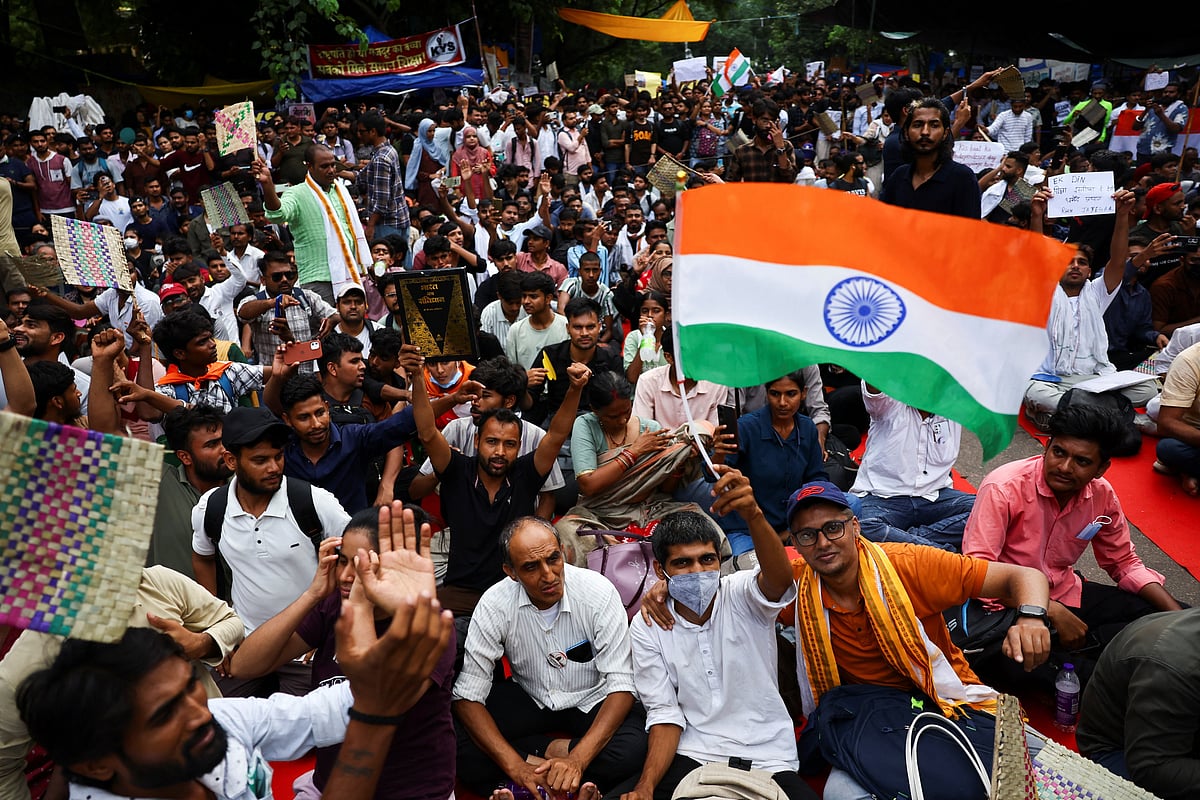
India's Union Education Minister Dharmendra Pradhan resigned on July 25, 2026, amidst widespread protest. This marks a significant shift from 2024 when he faced similar accusations but retained his position. The recent resignation, occurring after only a few weeks of pressure, highlights the success of a new protest movement, dubbed the 'Cockroach Janata Party' (CJP). The CJP emerged rapidly, garnering over 350,000 registrations and 20 million followers online within days, surpassing established parties like the BJP and Congress. The movement's success is attributed to several factors that circumvented the government's traditional methods of quelling dissent.
One key factor is the CJP's diverse social composition, which lacked the elements the ruling party typically used to label and marginalize protests. Unlike previous movements that were often branded as 'anti-national' or 'leftist conspiracies,' the CJP included students from coaching centers, job seekers from small towns, recent graduates, and gig economy workers. This broad demographic made it difficult to apply old labels like 'jihadi' or 'urban naxal.' Furthermore, the movement leveraged social media effectively, focusing on visual culture and creating shareable content. Independent journalists and citizen-generated content from mobile phones challenged the narrative control previously held by state-aligned media.
The underlying psychological shift also played a crucial role. This generation, accustomed to app-based services, expects immediate responses and visible accountability from institutions, including the state. Their expectation is of a contractual service relationship rather than a supplicant one. This mindset rendered the state's traditional tactics of fear, force, and accusations of foreign influence less effective. The movement's demands, initially focused on exam irregularities by the National Testing Agency and CBSE, tapped into a deeper frustration stemming from high youth unemployment, particularly among graduates. While the immediate success is evident, the article cautions that symbolic victories do not always translate into deep structural reforms, referencing the slow implementation of India's Lokpal Act. Nevertheless, a new political grammar has emerged, combining humor, transparency, and independent visual journalism to hold the state accountable.
The 'Cockroach Movement' demonstrates a significant evolution in citizen-state engagement, particularly in the digital age. The government's traditional strategies of labeling and marginalizing dissent proved ineffective against a movement whose composition and communication methods bypassed these tactics. The reliance on social media and independent visual journalism disrupted established media narratives, while the participants' expectations, shaped by digital service culture, fostered a demand for immediate accountability. This shift suggests that future governance models must adapt to a populace that views its relationship with the state less as a hierarchical structure and more as a service contract. The long-term challenge lies in translating this emergent political grammar into concrete institutional reforms, a process historically fraught with delays. The movement's success underscores a growing systemic tension between a digitally empowered citizenry and traditional governance frameworks, highlighting the need for adaptive policy and transparent processes to maintain public trust.
AI-generated to prompt reflection — not editorial opinion, not advice, not a statement of fact. How this works.