India's 'Cockroach' Movement Demands Education Minister's Resignation Amid Protests
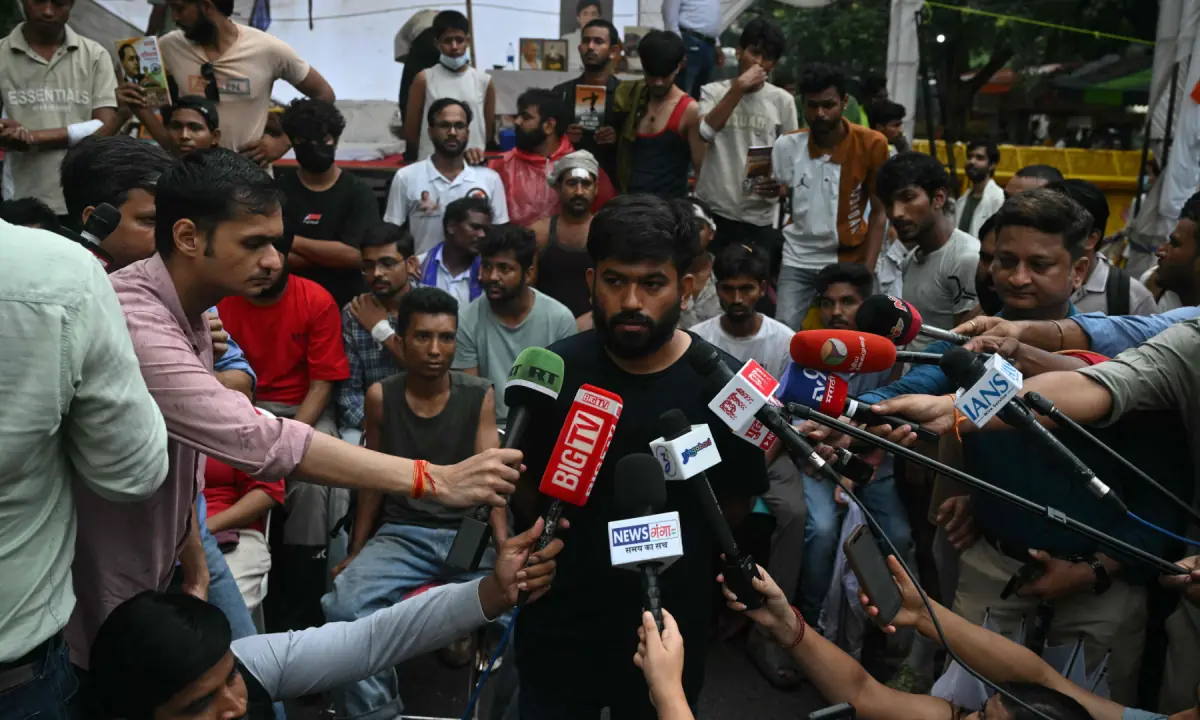
India's Cockroach Janta Party (CJP) movement has vowed to continue its campaign for the resignation of Education Minister Dharmendra Pradhan, following a significant protest in New Delhi on Tuesday. The movement, which has gained millions of social media followers since its May launch, organized a large demonstration on Monday demanding Pradhan's ouster and broader reforms in the education system. This protest represents a notable challenge to Prime Minister Narendra Modi's administration, especially after his party secured a third term in 2024. The CJP stated their resolve, with spokesperson Ashutosh Ranka emphasizing, "We won't stop. Pradhan has to be sacked." Hundreds of protesters remained at the Jantar Mantar site on Tuesday, advocating for systemic changes in education. Monday's rally saw police deploy tear gas and batons to prevent protesters from reaching parliament, resulting in at least 178 injuries, including 118 police personnel and approximately 60 protesters. Delhi Police described the protesters' behavior as "unruly, aggressive and violent," while protest organizers condemned the authorities' "high-handedness" and the alleged brutality against students. Ranka mentioned meeting with senior minister JP Nadda, but noted the government had not yet responded to their demands. These protests are occurring against a backdrop of widespread discontent in India, fueled by economic challenges and a series of examination scandals that have eroded public trust in the testing system. Recent incidents include a re-examination for 2.2 million medical aspirants due to a leaked question paper and another scandal involving the online marking of tests for nearly 2 million high school students.
The CJP movement's protests highlight significant public dissatisfaction with India's education system, exacerbated by recent examination scandals and broader economic anxieties. The movement's rapid growth on social media demonstrates the power of digital platforms in mobilizing citizens and challenging established governance structures. The government's response, including police action and official statements, suggests a tension between maintaining public order and addressing legitimate grievances. Future developments will likely depend on the administration's ability to implement credible reforms and restore confidence in educational integrity, balancing the demands for accountability with the need for systemic improvements. The long-term implications involve potential shifts in public trust and the efficacy of governance in addressing youth aspirations within a rapidly evolving economy.
AI-generated to prompt reflection — not editorial opinion, not advice, not a statement of fact. How this works.