India's 'Cockroach Movement' Protests Again, Opposition Leader Arrested
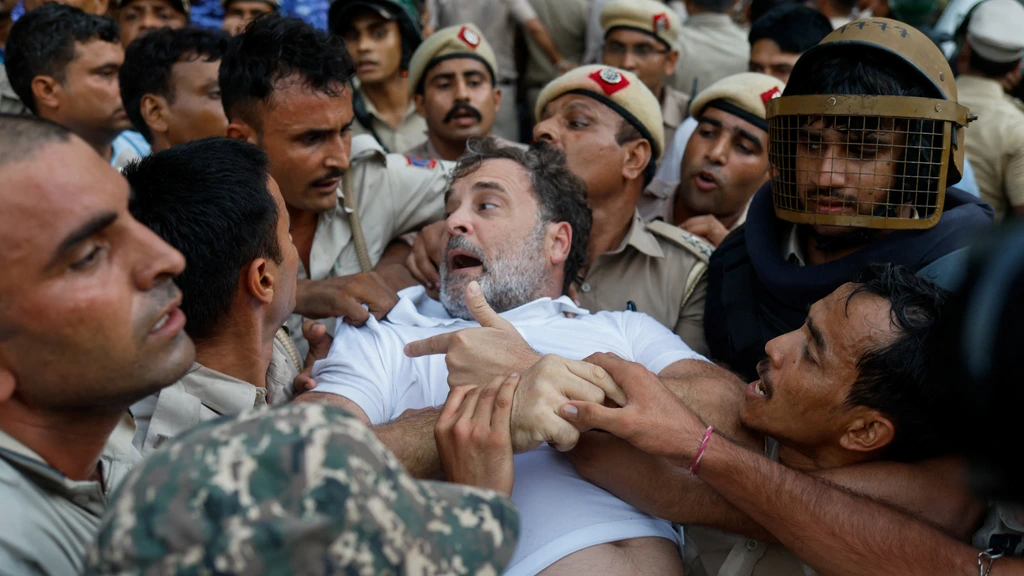
Thousands of supporters of India's 'Cockroach Movement' demonstrated again in the capital, New Delhi, protesting against the government. Opposition leader Rahul Gandhi participated in the protest and was subsequently arrested by police. This demonstration follows a day of intense clashes between police and protesters during a large march in the city. The movement's founder stated they would not march again to prevent further harm to youth by the police. Instead, protests were held at a long-standing demonstration site near Jantar Mantar, an eighteenth-century astronomical observatory. For over a month, protesters at this location, near government buildings, have demanded the resignation of the Education Minister.
The protests were triggered by a major exam fraud scandal affecting medical school admissions, which necessitated 2.2 million Indians retaking their exam. While a cabinet member assured that action would be taken against exam fraud, protesters remain unsatisfied. Opposition leader Gandhi and his party colleagues visited Prime Minister Modi's official residence to show solidarity with the demonstrators, and videos show the politicians being detained. Authorities had previously deemed the protest location unsuitable. Human rights organizations, including Amnesty International, have condemned the police's forceful intervention during the previous day's march, calling it an example of suppressing dissent in India. Police reportedly used tear gas and batons, resulting in seventy arrests, sixty injured protesters, and over a hundred injured officers. The 'Cockroach Movement,' initially satirical and online-based, adopted its name after a Supreme Court judge compared unemployed youth to cockroaches. Operating as the 'Cockroach Janta Party,' the youth movement satirically parodies Prime Minister Modi's Bharatiya Janata Party, which has been in power since 2014.
The 'Cockroach Movement' highlights significant public discontent stemming from alleged exam fraud and broader governance concerns in India, particularly impacting youth. The movement's satirical origins and provocative name, derived from a judicial remark, underscore a deep-seated frustration with established institutions and a desire for alternative forms of political expression. The government's response, characterized by forceful police action and arrests of opposition figures, suggests a tension between maintaining order and accommodating legitimate grievances. This dynamic risks further alienating segments of the population and could escalate social unrest if not addressed through more inclusive dialogue and transparent accountability mechanisms. The situation reflects a global trend where digital-native movements challenge traditional political structures, demanding greater responsiveness and integrity from public institutions, especially concerning educational and employment opportunities.
AI-generated to prompt reflection — not editorial opinion, not advice, not a statement of fact. How this works.