India's Education Minister Promises Reforms Amidst Widespread Protests Over Exam Leaks
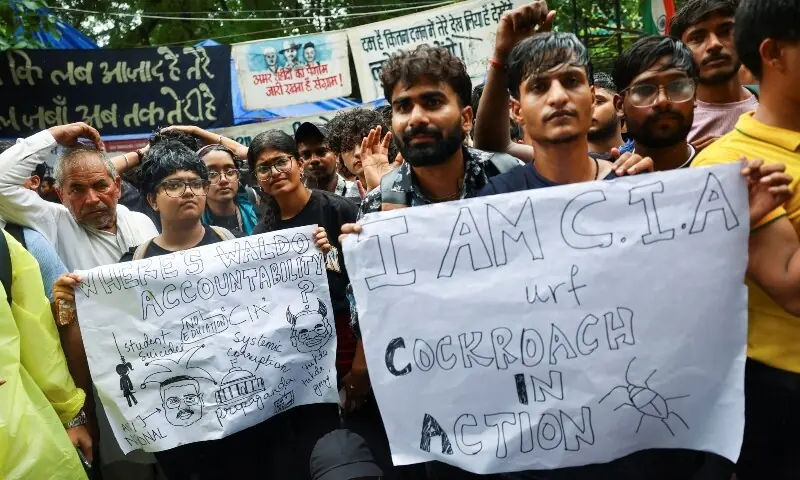
India's Education Minister Dharmendra Pradhan has pledged to address the concerns of protesting youth and implement exam reforms, signaling the government's response to escalating demonstrations. These protests, spearheaded by the youth-led "cockroach" movement, began last month following leaks in medical school entrance exams that impacted approximately two million students and were linked to several student suicides. The movement, initially a satirical online campaign by the self-named Cockroach Janta Party (CJP), has evolved into the most significant youth challenge to Prime Minister Narendra Modi's administration during his third term. Tens of thousands of protesters marched in New Delhi on Monday, leading to clashes with police who deployed tear gas and batons. The opposition Congress party, led by Rahul Gandhi, joined the protests with a sit-in, resulting in the detention of Gandhi, Priyanka Gandhi Vadra, and other senior leaders, though they were later released. Minister Pradhan stated on X that the government is committed to discussing the National Eligibility cum Entrance Test (NEET) and addressing youth concerns, accusing Gandhi's protest of using students for political gain. Prime Minister Modi also vowed to punish those responsible for the leaks and called for a foolproof exam system. Health Minister JP Nadda met with CJP leaders to discuss their demands. The exam leak controversy, coupled with frustrations over job shortages and the high cost of education, has fueled widespread anger among young Indians and provided a critical opportunity for opposition parties to challenge Modi's Bharatiya Janata Party (BJP). Activist Sonam Wangchuk, who began a hunger strike in support of the movement, was moved to a hospital by police, and later to a private facility following a court order.
The widespread protests in India over examination leaks highlight systemic vulnerabilities within the nation's large-scale assessment processes. The government's response, promising reforms and accountability, suggests an acknowledgment of the public pressure and the potential for sustained youth discontent to impact political stability. The movement's growth, from online satire to street demonstrations and opposition party involvement, indicates a broader frustration among young Indians concerning educational access, fairness, and economic opportunities. Moving forward, the challenge for the administration will be to implement reforms that are perceived as genuine and effective, thereby rebuilding trust and mitigating the risk of future unrest. The government's ability to deliver on these promises will be a key indicator of its capacity to address the evolving needs and expectations of its young demographic in the coming decade.
AI-generated to prompt reflection — not editorial opinion, not advice, not a statement of fact. How this works.