India's Indus water policy sparks conflict with Pakistan
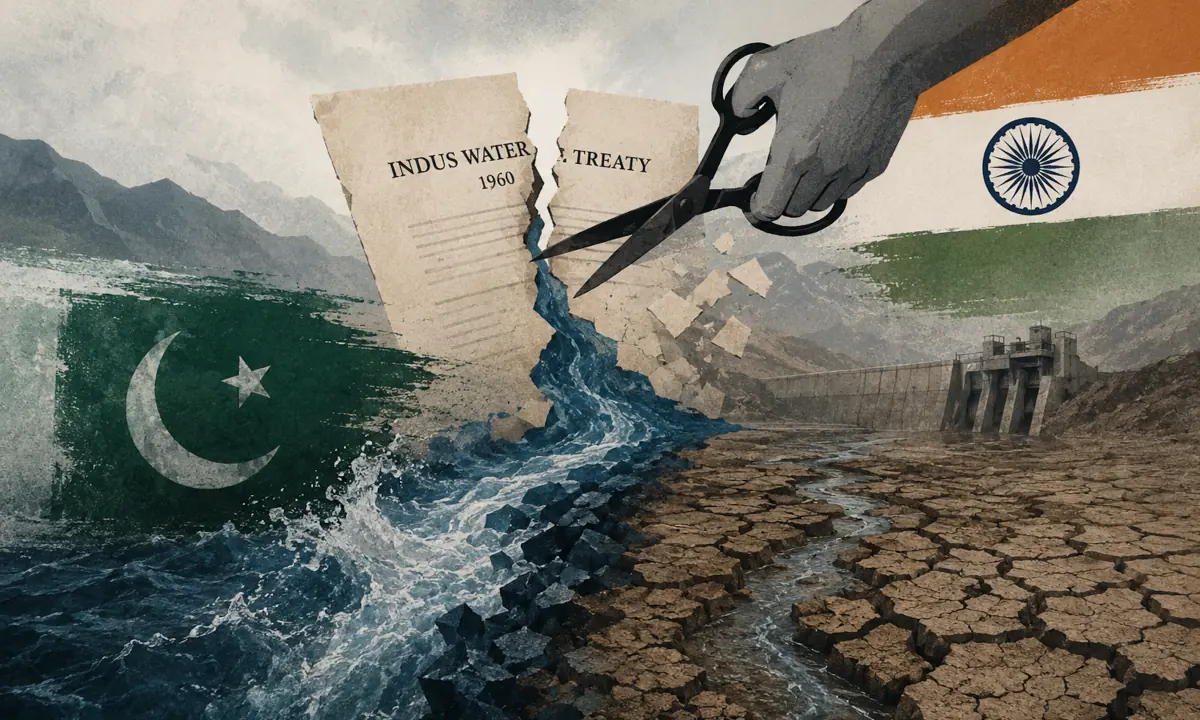
India's Prime Minister Narendra Modi has made a proclamation that the waters of the Indus basin exclusively belong to India, a move described as a suspension of the 1960 Indus Waters Treaty (IWT). This assertion is seen by critics as repudiating treaty obligations and weaponizing a shared resource, potentially imperiling Pakistan's agricultural lifeline. India is accelerating projects on the Chenab River, such as the Sawalkote endeavor, citing upper-riparian rights and energy needs, while claiming adherence to run-of-the-river constraints. However, these projects could lead to diminished water flows, ecological damage, and threaten food security for over 250 million people in Pakistan. This stance is contrasted with India's position as a lower riparian state concerning the Brahmaputra River, where it advocates for equitable utilization and the duty to cause no significant harm. Pakistan's legal position is based on the IWT annexures, which limit Indian activities on western rivers to preserve perennial flows. India's linking of dam construction to punitive objectives, with declarations that water will not reach Pakistan, is viewed as converting civilian infrastructure into instruments of strategic coercion, potentially constituting an act of war. Pakistan asserts its right to anticipatory self-defense under international law, citing Article 51 of the UN Charter, and referencing Additional Protocol I of the Geneva Conventions regarding the protection of dams. The article draws historical parallels to Operation Chastise, suggesting that dams used for aggression lose their protected status. It emphasizes that water is a fundamental human right and that international law provides recourse when a nation faces existential threats from hydrological warfare. The proximity of some Indian projects to the Line of Control is noted as a geostrategic vulnerability. Pakistan is pursuing legal avenues, including arbitration under the IWT, provisional measures at the International Court of Justice, and complaints to the International Criminal Court and the UN Human Rights Council. The article concludes that while Pakistan seeks peaceful resolution, India's actions may ultimately compel a resolution based on power rather than treaties.
The geopolitical tension surrounding the Indus Waters Treaty highlights the critical intersection of water resources, international law, and national security in a region facing climate change impacts. India's actions, framed by critics as a departure from treaty obligations and a potential weaponization of water, raise questions about the sustainability of existing water-sharing agreements when national interests and perceived existential threats diverge. The analysis suggests that while legal and diplomatic avenues are being pursued by Pakistan, the underlying power dynamics and strategic considerations, particularly given the proximity of infrastructure to disputed borders, could influence future outcomes. This situation underscores the broader challenge of managing transboundary water resources equitably and sustainably in an era of increasing scarcity and geopolitical competition, prompting a re-evaluation of how international frameworks can effectively address such complex interdependencies.
AI-generated to prompt reflection — not editorial opinion, not advice, not a statement of fact. How this works.