India's Kaladan Project Stalled: Internal Conflict and Geopolitical Shifts Cause Uncertainty
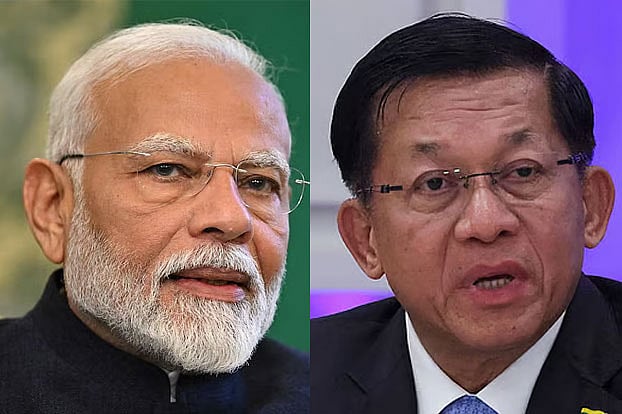
India's ambitious Kaladan Multi-Modal Transit Transport Project (KMTPP), designed to connect its northeastern states to the Bay of Bengal via Myanmar's Kaladan River, is facing severe uncertainty after over a decade of work and significant investment. The project, a cornerstone of India's 'Act East Policy,' was proposed as early as the 1960s by journalist B.G. Verghese and officially signed with Myanmar in 2008, commencing in 2010. However, the core objective of creating an alternative, direct route between mainland India and its northeastern regions remains unfulfilled.
The project's stagnation is attributed to a confluence of factors, including Myanmar's internal civil war, complex geopolitical dynamics, challenging terrain, and India's strategic indecisiveness. The 2021 military coup in Myanmar and the subsequent widespread armed rebellion have destabilized the Rakhine and Chin states, the project's primary operational areas. The Myanmar military, the Tatmadaw, has lost significant control in these regions, leaving the Indian government in a difficult position as the entity it partnered with no longer holds sway on the ground.
The rise of the powerful ethnic armed group, the Arakan Army, has dramatically altered the project's landscape. By early 2024, the Arakan Army seized control of key areas, including Paletwa town and the Sittwe port's riverine access, which are critical junctures for the Kaladan project. This led to security breakdowns, attacks on construction sites, and the forced evacuation of Indian workers and engineers. The most vulnerable segment, an approximately 110 km road section from Paletwa to the Mizoram border, is particularly affected, with one part completed but the remaining 48.5 km stalled due to intense conflict and the abandonment of heavy machinery.
India's diplomatic approach, focused on engaging with the formal government or military junta, has proven insufficient, as local ethnic armed groups wield more influence in border regions. While India has historically supported the Myanmar military against groups like the Arakan Army, leading to mistrust, recent informal discussions with the Arakan Army are underway to ensure project security, with the group reportedly willing to cooperate for economic benefits. The project's budget has ballooned from an initial $120 million to nearly $484 million due to delays, land acquisition issues, and administrative shortcomings, exacerbated by coordination gaps between Indian ministries. Furthermore, China's parallel development of a deep-sea port and economic zone near Sittwe, coupled with its influence over various ethnic armed groups, presents a significant geopolitical challenge to India's strategic interests in the region.
The Kaladan project exemplifies the systemic challenges inherent in large-scale infrastructure development within geopolitically volatile regions. India's strategy appears to have underestimated the decentralized nature of power and the enduring influence of ethnic armed organizations in Myanmar's borderlands, leading to a reliance on a central government that lacks effective control. This situation highlights a critical tension between state-to-state diplomatic engagement and the on-the-ground realities of conflict and local governance. The project's significant cost overruns and prolonged delays, compounded by the rise of actors like the Arakan Army and China's expanding regional economic footprint, suggest a need for more adaptive and nuanced geopolitical strategies. Future initiatives in similar environments may require a deeper integration of local stakeholder engagement and a more robust assessment of non-state actor dynamics to mitigate risks and ensure project viability in the long term.
AI-generated to prompt reflection — not editorial opinion, not advice, not a statement of fact. How this works.