India's Modi Government Faces Pressure Over Education Minister's Resignation Demand
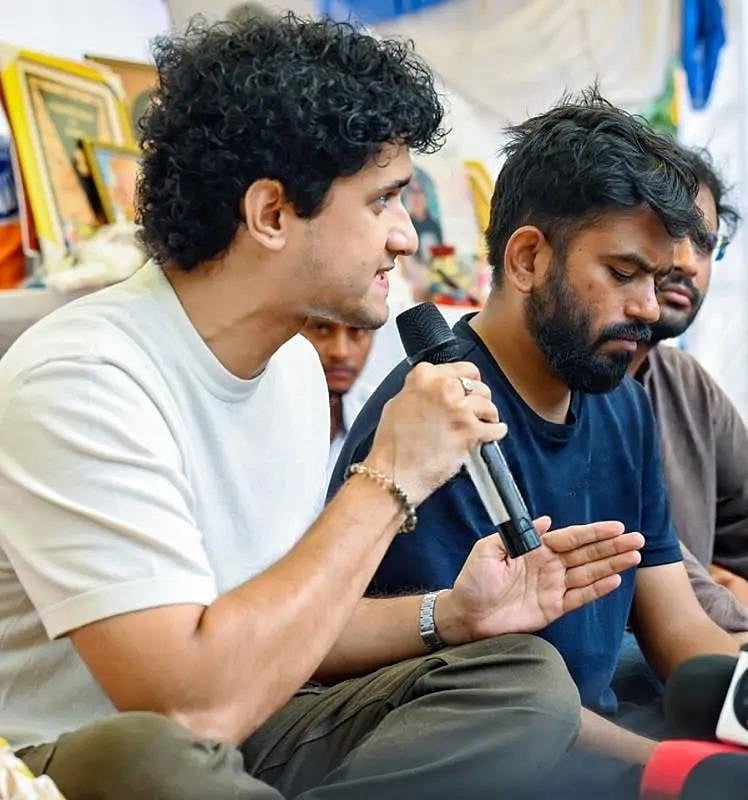
The Kokroach Janata Party (CJP) continues to demand the resignation of Education Minister Dharmendra Pradhan, setting a 24-hour ultimatum. The CJP has threatened to resume their march to Parliament if Pradhan does not resign voluntarily or is not removed. However, no indication has been given by Indian government officials that they will concede to this demand. Union Ministers JP Nadda and Jitendra Singh met with CJP spokespersons Saurav Das and Ashutosh Ranka to discuss the government's stance on the resignation demand, requesting 24 hours to respond. In a related development, the Indian government dismissed 47 officials from the National Testing Agency (NTA), the body responsible for the NEET exam, as part of a significant restructuring. Despite these actions, the government appears unlikely to change its position, potentially intensifying the deadlock between the two sides. A source close to the matter indicated that the government cannot afford to appear to capitulate to pressure from activist groups, fearing it could set a precedent for future demands against other ministers or even the Prime Minister. The CJP has reiterated its threat to restart its 'Chalo Sansad' program if Pradhan does not resign within the next 24 hours, with protests spreading across various Indian states. Ministers Nadda and Singh urged the CJP representatives to await a decision from the party's top leadership. The government is reportedly willing to consider compensation for the families of NEET candidates who died by suicide due to the exam's perceived flaws, but has requested the CJP not to announce a specific figure of one crore rupees per family. The government is also preparing to introduce a bill with stricter penalties for exam paper leaks, potentially including fines up to ten crore rupees. Prime Minister Narendra Modi has pledged to enact stringent laws against exam malpractice and establish fast-track courts for related cases.
The ongoing standoff between the CJP and the Indian government over the NEET exam scandal highlights a critical tension between public accountability and governmental stability. While the government's restructuring of the NTA and proposed legislative measures address systemic issues, the refusal to yield to calls for the Education Minister's resignation suggests a strategic calculation to avoid setting a precedent for activist-driven ministerial accountability. This approach prioritizes maintaining executive authority against potential future challenges. The government's willingness to explore compensation for affected families, while carefully managing public announcements, indicates a balancing act between acknowledging public distress and controlling the narrative. The situation underscores the evolving dynamics of citizen-state interaction in the digital age, where rapid information dissemination can amplify public pressure, forcing governments to navigate demands for transparency and responsiveness within established power structures.
AI-generated to prompt reflection — not editorial opinion, not advice, not a statement of fact. How this works.