India's Skyroot Aerospace Achieves First Private Orbital Rocket Launch
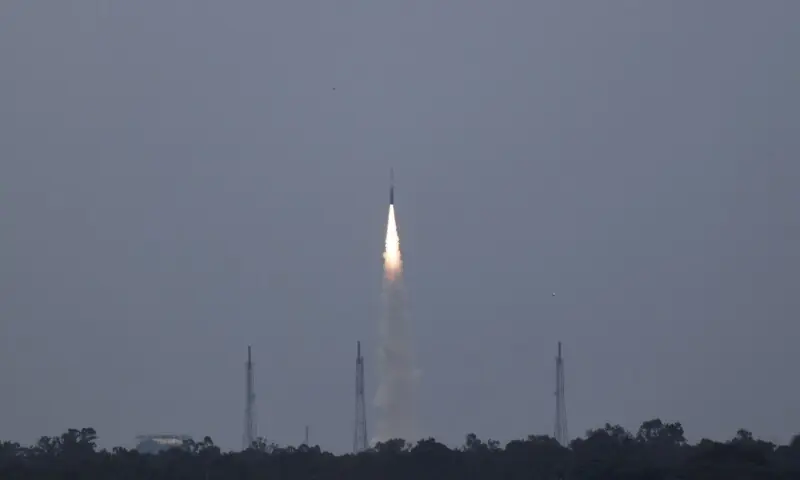
Indian space startup Skyroot Aerospace successfully launched the nation's first privately developed orbital rocket, Vikram-1, on Saturday from the Satish Dhawan Space Centre in Sriharikota. This maiden orbital mission, named "Mission Aagaman," carried multiple customer payloads and in-orbit experiments, successfully injecting them into a 450-kilometer orbit approximately 15 minutes after its 0635 GMT liftoff. The successful launch makes India the third country globally to achieve orbital launch capability through private enterprise.
The test flight is crucial for validating the rocket's propulsion, avionics, and guidance systems, gathering vital data for future commercial operations. Skyroot, founded in 2018, is part of a new wave of Indian space startups benefiting from sector liberalization and has already achieved a $1 billion valuation. The Vikram-1 rocket, standing 22 meters tall, is designed for payloads up to 350 kg to low-Earth orbit, utilizing solid-fuel stages and a 3D-printed engine for its liquid-fuel orbital adjustment module.
This achievement occurs amidst intense global competition in the small satellite launch market, where startups like Skyroot aim to challenge established players. India's government, which opened its space sector to private investment in 2020, aims to significantly boost its share of the global space economy from $8 billion to $44 billion by 2033, with private companies seen as key to achieving this goal.
Skyroot Aerospace's successful orbital launch marks a significant milestone, demonstrating India's rapidly advancing private space sector capabilities. This event underscores a global trend of increasing private participation in space exploration and commercialization, driven by government liberalization and the pursuit of independent access to space. The competition in the small satellite launch market is intensifying, with new entrants leveraging innovative technologies like 3D-printed engines to reduce costs and improve efficiency. Future success for Skyroot and similar companies will likely depend on their ability to scale operations, secure consistent commercial contracts, and navigate the complex regulatory landscape while maintaining a competitive edge against established global players and state-backed entities. The long-term viability of this burgeoning sector hinges on sustained investment and technological advancement, as nations and companies vie for a larger share of the expanding space economy.
AI-generated to prompt reflection — not editorial opinion, not advice, not a statement of fact. How this works.