India's Youth-Led Movement Challenges Modi Amidst Two Decades of Protests
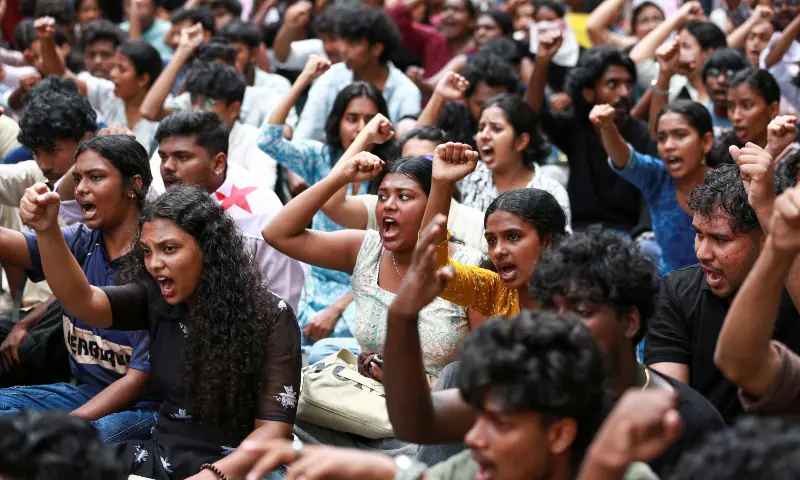
India is currently experiencing significant youth-led protests, with thousands demanding the education minister's resignation due to exam paper leaks. This movement, dubbed the "cockroach" movement by activists, represents a major challenge to Prime Minister Narendra Modi's government in its third term. The leaks are seen by activists as evidence of widespread corruption, a recurring theme that has fueled public demonstrations over the past twenty years.
Major protests have erupted periodically since 2011. In April 2011, anti-corruption activist Anna Hazare led a movement for stronger anti-graft legislation, drawing hundreds of thousands of supporters and resulting in the eventual passage of an anti-corruption law, though Hazare felt it was diluted. December 2012 saw widespread public outrage following the gang-rape of a young woman in New Delhi, leading to mass protests demanding systemic changes to address violence against women. In response, India amended laws and established fast-track courts. December 2019 witnessed large-scale protests and sectarian violence against the Citizenship Amendment Act, which critics argued discriminated against Muslims. September 2020 saw months of farmer protests against new agricultural laws, which were eventually repealed by the government. More recently, June 2022 saw protests against a new military recruitment policy, leading to rail blockades and a government offer of reserved state vacancies. August 2024 has seen months of protests by doctors demanding safer workplaces and swift justice following the rape and murder of a trainee doctor in Kolkata.
India's recent protests highlight persistent societal grievances and the evolving nature of citizen engagement with governance. The recurring themes of corruption, safety for women, and economic security underscore systemic challenges that transcend specific policy debates. The "cockroach" movement's focus on education and exam integrity, while seemingly narrow, taps into broader anxieties about meritocracy and opportunity in a rapidly developing nation. The government's response patterns, from legislative amendments to policy rollbacks and reserved vacancies, suggest a dynamic of reactive adaptation rather than proactive systemic reform. Looking ahead, the increasing mobilization of youth and diverse professional groups, amplified by digital connectivity, indicates a growing demand for accountability and transparency. Future governance strategies will likely need to address these underlying structural issues to foster sustained public trust and social stability, rather than solely managing episodic crises.
AI-generated to prompt reflection — not editorial opinion, not advice, not a statement of fact. How this works.