India's Youth Movement Challenges PM Modi Amidst Exam Scandal
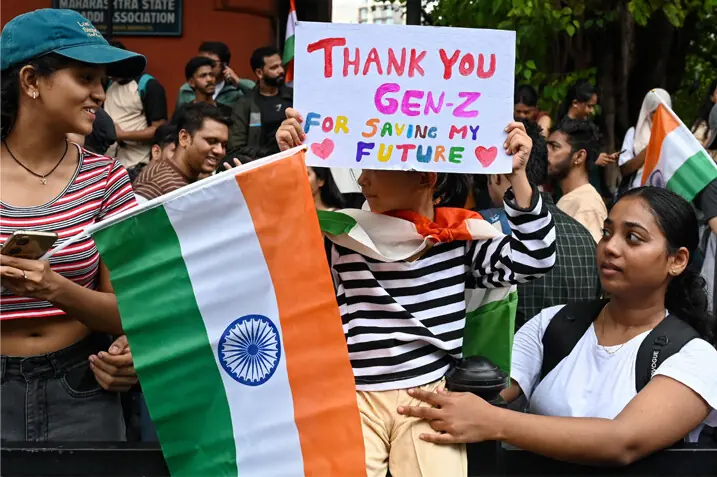
A significant youth-led protest movement in India, spearheaded by the Cockroach Janta Party (CJP), has led to the resignation of the Education Minister, Dharmendra Pradhan. The CJP, which gained 22 million mainly Gen Z followers on Instagram in May, demanded Pradhan's resignation over leaked medical-entrance exam papers. Prime Minister Narendra Modi acknowledged the youth's "suffering" in a rare selfie video and promised remedial actions, but this was initially insufficient for the thousands protesting nationwide. The education minister's stepping down marks a notable setback for Modi, whose political dominance since 2014 has been largely unchallenged. Experts suggest the protests, initially triggered by the exam leak, reflect broader anxieties among Indian youth concerning unemployment and the potential impact of AI on jobs. Political analyst Amitabh Tiwari stated the protests are a "reflection of the anxiety, nervousness, discontent, frustration and anger among the youth." While the CJP is not a formal political party, opposition parties are attempting to leverage the situation. Potential impacts of this youth discontent could be seen in upcoming state elections in Uttar Pradesh, Punjab, and Gujarat, and potentially in the 2029 national election if the CJP enters electoral politics. The movement highlights a potential shift in political engagement, with platforms like Instagram becoming more influential among younger demographics than traditional platforms like X, where the ruling BJP has historically focused its digital strategy.
The recent surge of youth activism in India, catalyzed by exam irregularities and amplified by social media, underscores a critical generational shift in political engagement. This movement demonstrates how digital platform dynamics, particularly the rapid growth of Instagram among Gen Z, can challenge established political communication strategies. The government's response, including ministerial resignation and promises of reform, reflects an attempt to address mounting public discontent, yet it also signals the increasing difficulty for traditional political structures to align with the evolving expectations and communication channels of younger demographics. Future political success in India may increasingly depend on the ability of parties to authentically connect with and mobilize this digitally-native generation, moving beyond conventional campaign tactics to address core concerns like employment and future economic security in an AI-influenced world.
AI-generated to prompt reflection — not editorial opinion, not advice, not a statement of fact. How this works.