India Secures Australian Uranium Supply Deal for Nuclear Energy Goals
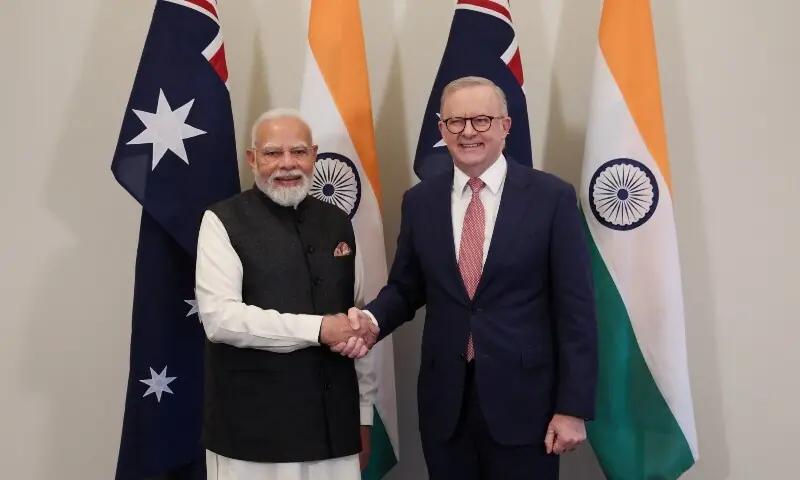
Indian Prime Minister Narendra Modi announced on Thursday that India has finalized a uranium supply agreement with Australia during his visit. This pact is expected to significantly boost India's nuclear energy ambitions and its pursuit of clean energy objectives. India, facing a massive demand for electricity, plans to expand its nuclear power generation capacity in the coming years. Australia possesses approximately 28% of the world's uranium resources, but previous exports to India have been limited by legal and political challenges.
Following discussions with Australian Prime Minister Anthony Albanese, Modi stated that the agreement will facilitate long-term uranium exports for peaceful purposes, under the oversight of the International Atomic Energy Agency (IAEA). Albanese highlighted that this arrangement will help increase the proportion of non-fossil fuel power in India's energy mix. While a nuclear cooperation agreement was signed in 2015, this new deal aims to overcome existing trade barriers. The visit also coincided with discussions on the growing Indian diaspora in Australia, which has become the largest overseas-born community in the country, outnumbering the British.
The uranium supply agreement between India and Australia underscores the strategic importance of nuclear energy in addressing global clean energy demands and national power needs. This development highlights the complex interplay between resource-rich nations, energy-importing countries, and international regulatory frameworks like the IAEA. For India, securing reliable fuel sources is critical for its ambitious nuclear expansion plans, which are central to its climate commitments and energy security strategy. Australia, as a major uranium producer, faces the challenge of balancing its resource potential with domestic political considerations and international non-proliferation norms. The long-term implications of such agreements will be shaped by evolving geopolitical landscapes, technological advancements in nuclear power, and sustained international cooperation on safety and security protocols.
AI-generated to prompt reflection — not editorial opinion, not advice, not a statement of fact. How this works.