India-UK Trade Deal Becomes Effective, Reducing Tariffs and Expanding Services Access
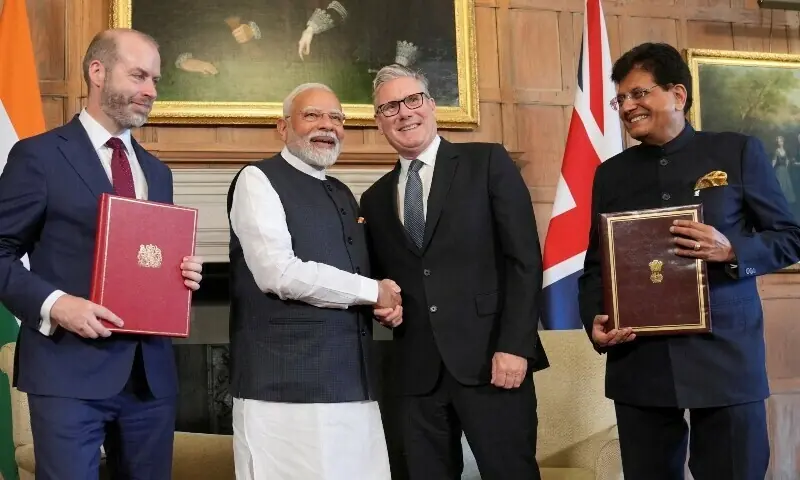
The Comprehensive Economic and Trade Agreement between India and the United Kingdom officially took effect on Wednesday, introducing tariff reductions on numerous goods and enhancing market access for services, businesses, and professionals in both nations. This pact grants Indian exporters duty-free access to the majority of British tariff lines, significantly benefiting sectors such as textiles, leather, footwear, marine products, gems, jewelry, and processed foods. Conversely, Britain will experience phased tariff cuts and quotas for its products, including automobiles and silver, while also gaining increased access to India's financial services, education, insurance, and professional services sectors. Prime Minister Narendra Modi highlighted that the agreement, alongside a social security pact, will strengthen economic ties and provide new impetus for Indian farmers, entrepreneurs, and small businesses. In the 2025-26 fiscal year, India's goods exports to Britain reached $13.44 billion, with imports at $11.68 billion, while bilateral services trade in 2024 amounted to $35.44 billion, showing a surplus for India of nearly $7.9 billion. Britain will immediately eliminate duties on 96.8% of its tariff lines, covering 97.7% of trade value, while India will remove duties on 64.1% of its tariff lines at once, with a further 21% to be phased out gradually, excluding sensitive items. Indian engineering exports, a significant market for Britain, are projected to exceed $7.5 billion by 2029-30, with the agreement expected to improve market access for electrical machinery, auto components, and steel. The agreement also facilitates temporary entry for various professionals and business visitors, with a linked convention potentially saving approximately 75,000 Indian workers and 900 employers from double social security contributions for up to five years. Furthermore, the pact opens up Britain's government procurement market, valued at approximately $121 billion, to Indian suppliers, with reciprocal opportunities offered by India.
The implementation of the India-UK trade agreement signifies a strategic alignment aimed at leveraging comparative advantages and fostering economic growth through reduced trade barriers. For India, the immediate tariff eliminations on a substantial portion of its exports, particularly in manufacturing and agriculture, are designed to enhance global competitiveness and stimulate domestic production. For the UK, the agreement provides access to India's rapidly expanding consumer market and key sectors, though the phased approach to certain goods like automobiles suggests a balancing act between market access and protecting domestic industries. The provisions for services and professional mobility, including social security exemptions, address critical non-tariff barriers, potentially boosting the significant bilateral services trade and facilitating talent exchange. The success of this pact will likely hinge on effective implementation, the navigation of remaining sensitive product exclusions, and the ability of businesses in both nations to capitalize on the expanded market opportunities within the evolving global economic landscape.
AI-generated to prompt reflection — not editorial opinion, not advice, not a statement of fact. How this works.