India: Youth-led protests escalate against Modi government over education and exam scandals
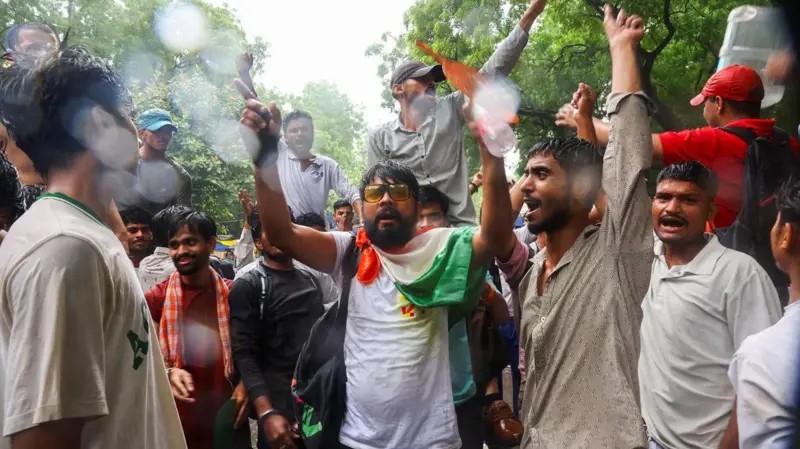
Thousands of demonstrators, led by young activists, are intensifying pressure on India's government with ongoing protests in New Delhi's Jantar Mantar. The group, calling itself the Janata Citizen Party (JCP), is demanding educational reforms and the resignation of Education Minister Dharmendra Pradhan. Protests gained significant momentum on Tuesday, July 21, when leaders from India's main opposition party, the Indian National Congress (INC), joined the demonstrations despite heavy rainfall. The JCP movement was reportedly inspired by a statement from the Chief Justice of India, who initially used the term 'cockroaches' to describe unemployed youth involved in journalism and activism, later clarifying he meant those with fraudulent degrees. The demonstrators are also protesting irregularities surrounding a national medical college entrance exam held in May, which was canceled by the government due to a question paper leak, affecting millions of students. The protests have evolved into a prominent display of public dissent against Prime Minister Narendra Modi. Monday, July 20, saw a harsh police crackdown on JCP demonstrations, resulting in dozens of injuries among protesters and police. Police dispersed crowds with batons and tear gas, dismantling protest infrastructure. INC leaders, including Rahul Gandhi, were briefly detained. Opposition figures like Arvind Kejriwal and Sharad Pawar visited the protesters. On Tuesday, INC President Mallikarjun Kharge and Rahul Gandhi led a march to Modi's residence, calling for his resignation and that of other ministers. Gandhi stated the government should apologize to students and accused it of preventing parliamentary debate on the issue. Minister Pradhan criticized the INC for using students for political gain, while acknowledging the government's commitment to providing answers and reforms. Activist Sonam Wangchuk has been on an indefinite hunger strike in solidarity with the JCP since June 28 and was forcibly removed by police on Saturday, July 18. Support for the JCP has spread to other major cities across India.
The recent protests in India highlight a growing public demand for accountability and reform within the nation's education system, particularly concerning examination integrity and youth employment. The "cockroach" remark, though initially controversial, has inadvertently galvanized a youth movement that is leveraging public discontent over systemic issues like exam leaks and perceived governmental inaction. The involvement of major opposition parties signals a broader political challenge to the ruling administration, framing the education crisis as a critical issue of governance. Future policy responses will likely need to address not only the immediate concerns of student welfare and exam security but also the underlying economic and social pressures contributing to youth disillusionment. The government's challenge lies in balancing the need for decisive action with maintaining public trust and fostering an environment where legitimate dissent can be addressed constructively, rather than through confrontation.
AI-generated to prompt reflection — not editorial opinion, not advice, not a statement of fact. How this works.