Indian Activist Ends Hunger Strike, Protests for Education Reform Continue
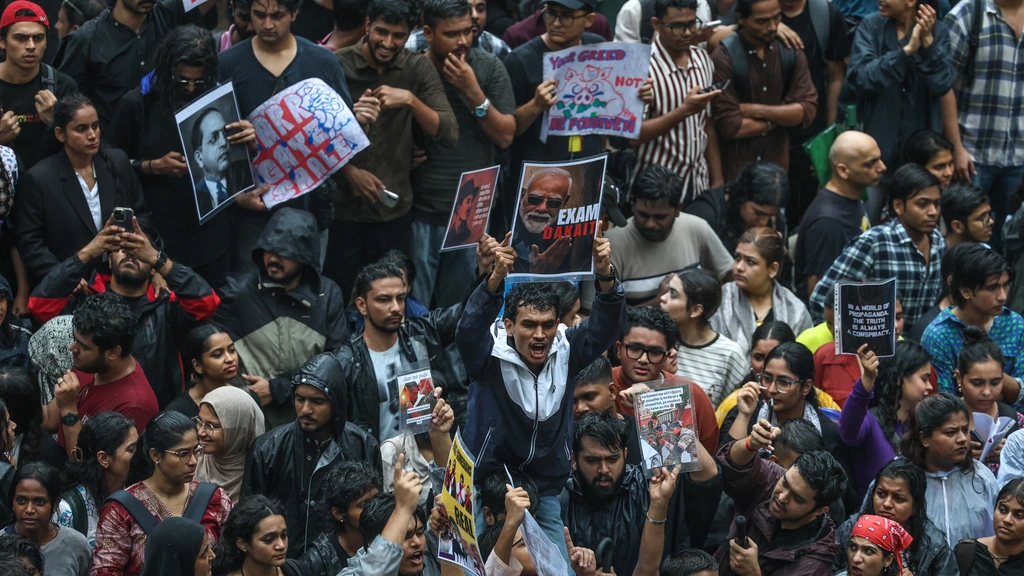
Indian activist Sonam Wangchuk has ended his 26-day hunger strike, which was initiated to support the demands of the 'Cockroach' movement. While Wangchuk has ceased his personal protest, other activists have pledged to continue the demonstrations, marking one of the longest periods of public dissent against Prime Minister Modi's government in recent years. The movement initially focused on education reforms following exam fraud in India's medical entrance exams but has since expanded to address broader issues like unemployment and economic inequality. Protests have spread across the country, with thousands taking to the streets this week. In New Delhi, police used tear gas and batons to disperse demonstrators attempting to reach the parliament. Abhijeet Dipke, the founder of the 'Cockroach' movement (CJP), also participated in a hunger strike but ended it early at Wangchuk's request. Wangchuk stated he ended his strike after appeals from parliament members and extensive negotiations regarding various conditions, citing concerns about potential violence. Dipke vowed that Wangchuk's sacrifice would not be in vain and insisted the protests would persist until the Indian Minister of Education, Dharmendra Pradhan, resigns. Although Prime Minister Modi has resisted calls to dismiss his minister, he has promised legislation to prevent exam leaks and expedite the prosecution of offenders. The activists, however, remain unconvinced, demanding the minister's resignation as a prerequisite for meaningful dialogue. Talks between CJP leaders and government representatives are scheduled, but activists are bracing for further confrontations with authorities. The CJP has occupied the Jantar Mantar observatory in New Delhi, vowing not to leave until the education minister steps down. Dipke anticipates potential arrests of CJP members and urges supporters to maintain the protest.
The 'Cockroach' movement's sustained public dissent highlights systemic challenges within India's education and governance structures, particularly concerning exam integrity and youth employment. The government's response, oscillating between suppression and limited concessions, suggests a struggle to effectively address the root causes of public discontent. The movement's ability to mobilize youth, employ satirical online criticism, and adapt to police actions indicates a sophisticated form of grassroots activism that traditional state responses may not adequately counter. This dynamic underscores the growing influence of digitally-native citizen movements and the imperative for responsive, transparent governance to maintain public trust and social stability in the coming decade.
AI-generated to prompt reflection — not editorial opinion, not advice, not a statement of fact. How this works.