Indian activist Sonam Wangchuk's wife alleges illegal detention during hospitalization
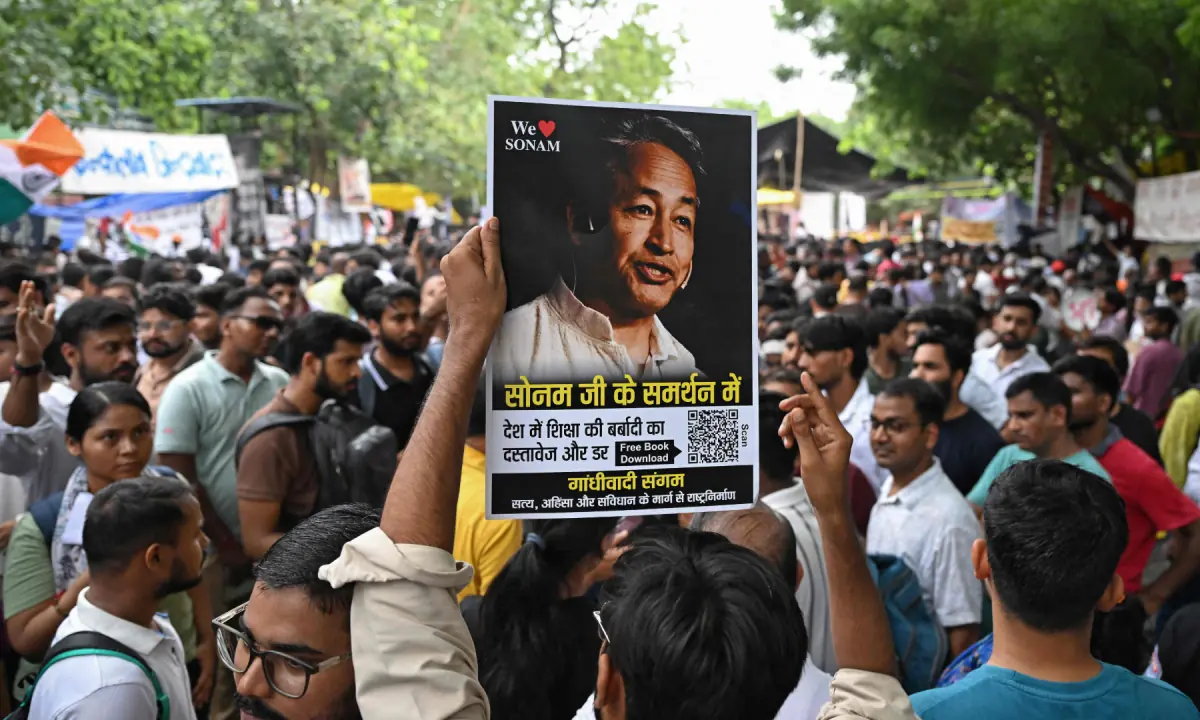
Gitanjali J. Angmo, wife of Indian activist Sonam Wangchuk, has accused the government of illegal detention disguised as medical care after her husband was taken to a hospital against his will. Wangchuk, 59, had been on a hunger strike since June 28, protesting alleged university exam fraud and demanding the education minister's resignation following a leak of test materials that forced over two million students to retake exams. Angmo expressed distrust in the government hospital, which she claims denied her request to transfer Wangchuk to a private facility. She reported a heavy police presence, with over 100 officers at the hospital and around 30 on their floor, severely restricting their movement. The hospital stated on Saturday that Wangchuk had refused recommended medical interventions, including intravenous fluids and medications, despite repeated counseling. Wangchuk's protest gained traction as opposition parties backed his cause, and several student and political groups planned demonstrations during the upcoming parliamentary session in New Delhi. The founder of the Cockroach Janta Party (CJP) online movement, Abhijeet Dipke, also began an indefinite hunger strike in solidarity. On Sunday, hundreds gathered at Wangchuk's former protest site, demanding accountability and the education minister's arrest, while hundreds of thousands of students had recently retaken an exam due to the prior leak.
The situation surrounding Sonam Wangchuk's hospitalization highlights a critical tension between public protest and state intervention, particularly concerning health and legal frameworks. The allegations of "illegal detention" under the guise of medical care raise questions about the proportionality of state actions when individuals engage in civil disobedience, especially when health deteriorates. The significant police presence and the hospital's statement about the patient's refusal of treatment suggest a complex interplay of public safety concerns, patient autonomy, and the government's response to widespread public discontent over educational integrity. Future governance models may need to establish clearer protocols for managing hunger strikes and protests involving vulnerable individuals, ensuring that medical interventions are consensual and that detention, even for health reasons, adheres strictly to due process and human rights standards, thereby fostering greater public trust in institutions.
AI-generated to prompt reflection — not editorial opinion, not advice, not a statement of fact. How this works.