Indian activist taken to hospital during hunger strike
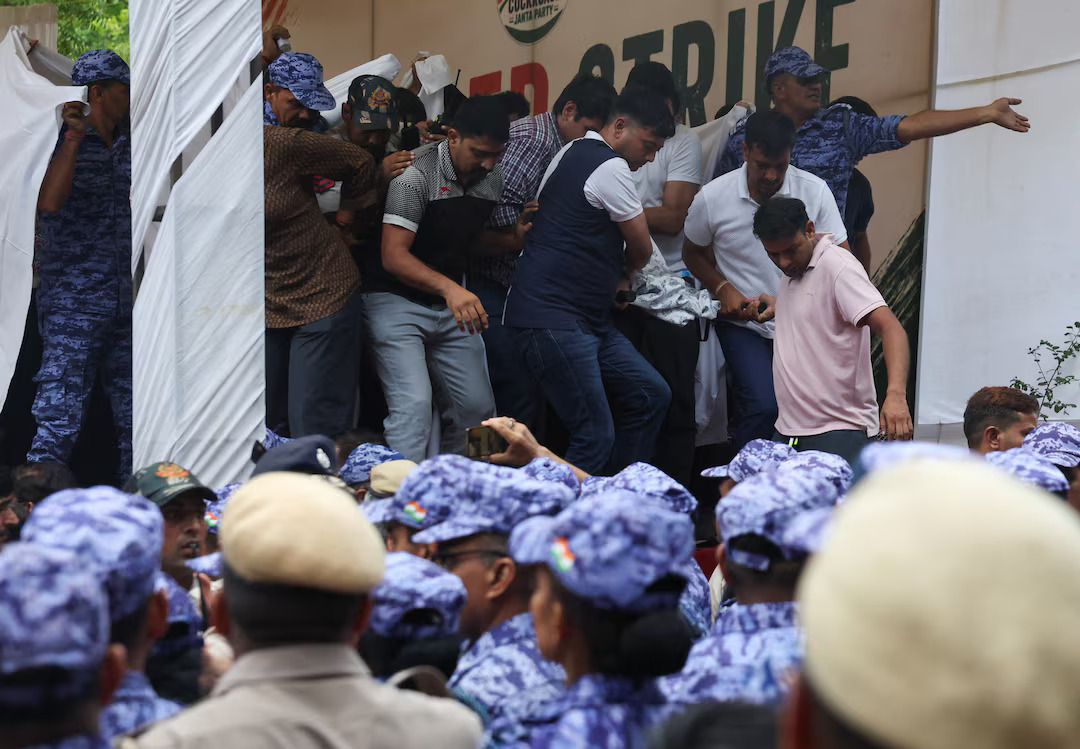
Sonam Wangchuk, an Indian engineer and activist, was taken to a hospital on Saturday, reportedly against his will. Television footage captured dozens of security personnel, some in plain clothes, using large white cloth sheets to obscure the view on a protest stage before Wangchuk was removed. Wangchuk had been on a hunger strike to protest against alleged illegal mining in Ladakh, a region in the Himalayas. He had previously stated his intention to continue his fast until his demands were met. The activist is advocating for greater environmental protection and autonomy for Ladakh. His protest highlighted concerns about the ecological impact of industrial development in the fragile Himalayan ecosystem. The authorities' actions have drawn criticism from supporters and environmental groups.
The forceful relocation of Sonam Wangchuk from his protest site to a hospital raises questions about the balance between public order and the right to peaceful dissent. While authorities may cite public health concerns for an individual undertaking a hunger strike, the manner of his removal, involving a large security presence and obscured visibility, suggests a potential attempt to quell public attention on the protest's message. This event underscores the ongoing tension between development pressures and environmental preservation in regions like Ladakh, and how state responses can impact the perception of democratic freedoms. Future governance models in such ecologically sensitive areas will need to navigate these competing interests more transparently to foster sustainable development and maintain public trust.
AI-generated to prompt reflection — not editorial opinion, not advice, not a statement of fact. How this works.