Indian police clash with protesters demanding action on exam leaks
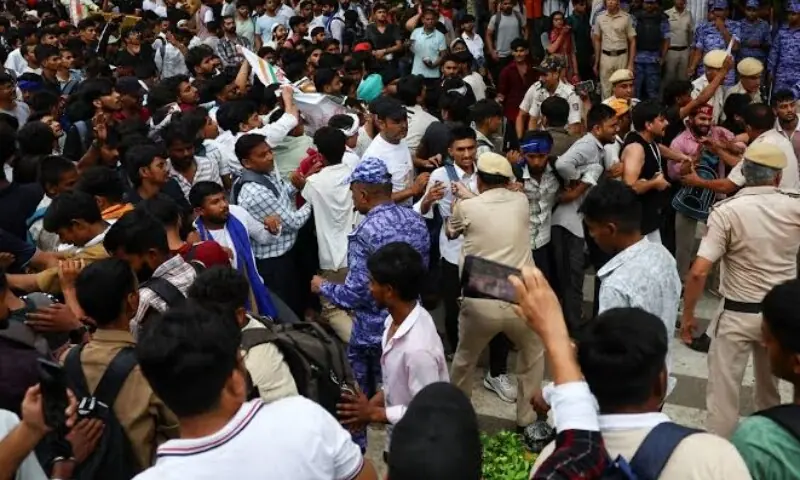
Police used batons on supporters of India's "cockroach" movement in New Delhi on Monday as they attempted to march on parliament, despite being denied permission for the protest. The movement, which began months ago, is considered a significant public challenge to Prime Minister Narendra Modi's administration. The protest gained momentum after activist Sonam Wangchuk, who was on a hunger strike, was moved to a hospital by authorities on Saturday. Thousands of supporters gathered at Jantar Mantar, a protest site in central New Delhi, for the march coinciding with the opening of parliament's monsoon session. Delhi police reported approximately 10,000 protesters were present, with additional security personnel deployed, raising concerns of a potential standoff. While television footage showed police using batons, authorities denied excessive force, stating the protest was being handled professionally. Protesters chanted slogans against Education Minister Dharmendra Pradhan and Prime Minister Modi. Saurav Das, chief spokesperson for the Cockroach Janta Party (CJP), indicated a willingness to talk with the government, though he noted the talks had come late. The CJP movement was sparked by the leak of national medical school entrance exam papers in May, which affected over 2 million students and necessitated a re-examination. Protesters expressed frustration with perceived illiteracy among leaders and widespread corruption in examinations. The movement initially gained substantial online traction, with millions of followers on Instagram, and has since attracted support from some opposition parties. CJP founder Abhijeet Dipke and supporters had been staging a sit-in demanding Pradhan's resignation, with Wangchuk joining their hunger strike. Wangchuk stated he would end his fast if the government acknowledged failures in the education system and paper leaks, or if protesters were allowed to reach parliament with assurances that their issues would be addressed. He also proposed ending the strike if lawmakers met him in the hospital with similar assurances, given his health condition. Analysts suggest the CJP's rise reflects growing youth frustration over issues like high youth unemployment, which stood at 9.9% for those aged 15-29 in 2025, with urban unemployment at 13.6%.
The "cockroach" movement's protest highlights systemic issues within India's education and examination sector, exacerbated by high youth unemployment. The government's response, involving denial of permits and forceful dispersal of protesters, suggests a tension between maintaining public order and addressing legitimate public grievances. This dynamic, particularly concerning examination integrity and youth employment, represents a significant governance challenge. The movement's rapid growth, fueled by social media, indicates a potent form of citizen mobilization that could continue to pressure policymakers. Future policy approaches will likely need to balance security concerns with the imperative to reform examination processes and create more robust employment opportunities for young citizens to mitigate widespread discontent and ensure long-term social stability.
AI-generated to prompt reflection — not editorial opinion, not advice, not a statement of fact. How this works.