Indian Scientists Develop "Placenta-on-a-Chip" to Study Drug Safety in Pregnancy
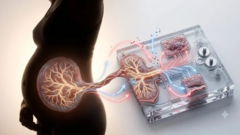
Indian scientists have developed a groundbreaking "placenta-on-a-chip" technology that replicates the functions of the human placenta in a laboratory setting. This innovative tool is designed to facilitate the study of drug safety during pregnancy, investigate placental complications, and understand the exchange of nutrients between mother and child. The technology aims to provide crucial answers regarding whether medications taken by pregnant individuals reach the fetus. This advancement holds significant potential for improving prenatal care and ensuring the well-being of both mother and baby. The research is expected to yield important insights into the complex processes occurring during gestation. By mimicking the biological functions of the placenta, scientists can now conduct more precise and controlled experiments. This could lead to better guidelines for medication use during pregnancy and a deeper understanding of fetal development. The development represents a significant step forward in reproductive health research in India.
This development in "placenta-on-a-chip" technology offers a controlled environment to assess the safety of medications during pregnancy, moving beyond traditional animal models or less precise in-vitro methods. By simulating nutrient and drug transfer, it addresses a critical knowledge gap in maternal-fetal medicine. Future applications could refine drug development pipelines, potentially reducing the risk of adverse pregnancy outcomes and improving the precision of prenatal care recommendations. This technology aligns with a broader trend towards more sophisticated biological modeling, enabling deeper insights into complex physiological interactions and paving the way for personalized medicine approaches in reproductive health.
AI-generated to prompt reflection — not editorial opinion, not advice, not a statement of fact. How this works.