Indian Scientists Develop Placenta-on-a-Chip to Study Drug Transfer During Pregnancy
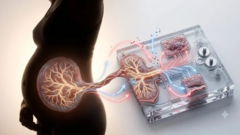
Indian scientists have developed a novel 'placenta-on-a-chip' technology that replicates the functioning of the human placenta in a laboratory setting. This groundbreaking innovation aims to facilitate research into the safety of medications taken during pregnancy and their potential transfer to the fetus. The technology will also enable a deeper understanding of placental complications and the exchange of nutrients between mother and child. This development is expected to provide crucial answers regarding the impact of maternal drug intake on fetal development. The research is being conducted in India and is poised to offer significant insights into prenatal health and drug safety. The 'placenta-on-a-chip' system allows for controlled experiments that were previously difficult or impossible to conduct ethically. This advancement could lead to improved guidelines for medication use during pregnancy, ultimately benefiting both maternal and infant health. The technology mimics the complex biological processes of the placenta, offering a more accurate model for scientific study.
This technological advancement in India addresses a critical gap in understanding maternal-fetal drug transfer. By creating a functional in-vitro model of the placenta, researchers can now investigate drug efficacy and safety without direct in-vivo human trials, potentially accelerating the development of safer prenatal treatments. This 'placenta-on-a-chip' system represents a paradigm shift in pharmaceutical research, enabling more precise study of nutrient exchange and the mechanisms behind placental complications. The system's ability to mimic complex biological interactions offers a powerful tool for personalized medicine, potentially leading to tailored drug regimens for pregnant individuals in the future. This innovation aligns with global trends towards advanced biological modeling and could significantly influence regulatory approaches to drug approval for pregnant populations.
AI-generated to prompt reflection — not editorial opinion, not advice, not a statement of fact. How this works.