Indigenous Communities Blame Illegal Mining for Polluting Crystal Waterfall in Roraima
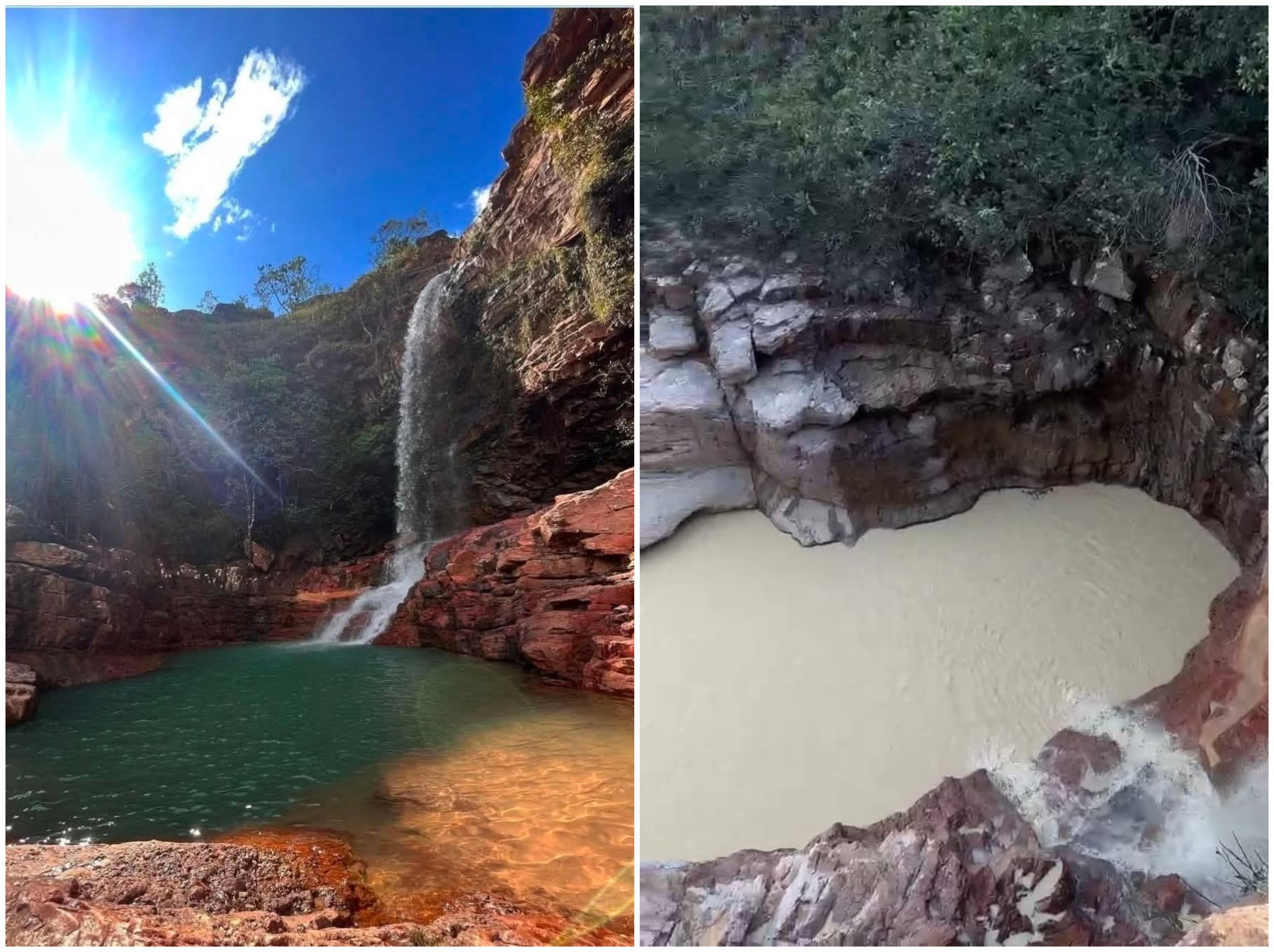
The Urucá waterfall in Uiramutã, Roraima, known for its crystal-clear waters, has become dense and muddy, according to videos released by the municipality's Civil Defense and the Indigenous Council of Roraima (CIR). Indigenous organizations and local residents attribute the pollution to the expansion of illegal mining operations within the Raposa Serra do Sol Indigenous Land. Videos show mining machinery operating above the waterfall, causing significant environmental damage and discharging sediment into the water. A local resident, who wished to remain anonymous, expressed heartbreak over the destruction and stated that miners use informants to evade environmental control operations, burying their equipment when authorities approach. The mining methods involve explosives to break rocks and mercury to separate gold, contaminating water sources and the fish consumed by local communities. The CIR plans to notify the National Indian Foundation (Funai), the Federal Police (PF), and the Brazilian Institute of Environment and Renewable Natural Resources (Ibama) about the environmental crime. The Roraima state government stated that illegal mining and pollution on indigenous lands fall under federal jurisdiction, making enforcement and investigation the responsibility of Union bodies. The contamination of the Urucá stream is a long-standing issue, with indigenous leaders reporting at least 500 invaders in the territory, particularly affecting the Urucá community and others like Napoleão, Tarame, Raposa I, and Raposa II. In 2025, the Uiramutã City Hall had already alerted federal authorities about siltation, altered watercourses, and loss of riparian vegetation. Beyond environmental impacts, the CIR has also raised concerns about social damages, including threats to residents, river contamination, and the exploitation of young indigenous people in degrading working conditions.
The transformation of the Urucá waterfall from a pristine natural attraction to a polluted water body highlights a persistent conflict between resource extraction and environmental preservation, particularly within protected indigenous territories. The involvement of illegal mining, characterized by destructive methods and the use of mercury, poses significant ecological and public health risks, impacting water quality, biodiversity, and the traditional livelihoods of indigenous communities. The reported evasion tactics employed by miners suggest systemic challenges in enforcement, potentially due to insufficient resources or coordination among federal and state agencies responsible for oversight. This situation underscores the ongoing tension between economic pressures driving illicit activities and the imperative to uphold indigenous land rights and environmental regulations, demanding a robust and sustained inter-agency response to address both the immediate pollution and the underlying drivers of illegal mining.
AI-generated to prompt reflection — not editorial opinion, not advice, not a statement of fact. How this works.