Indigenous Community in São Paulo Safeguards Native Stingless Bees and Warns of Ecosystem Threats
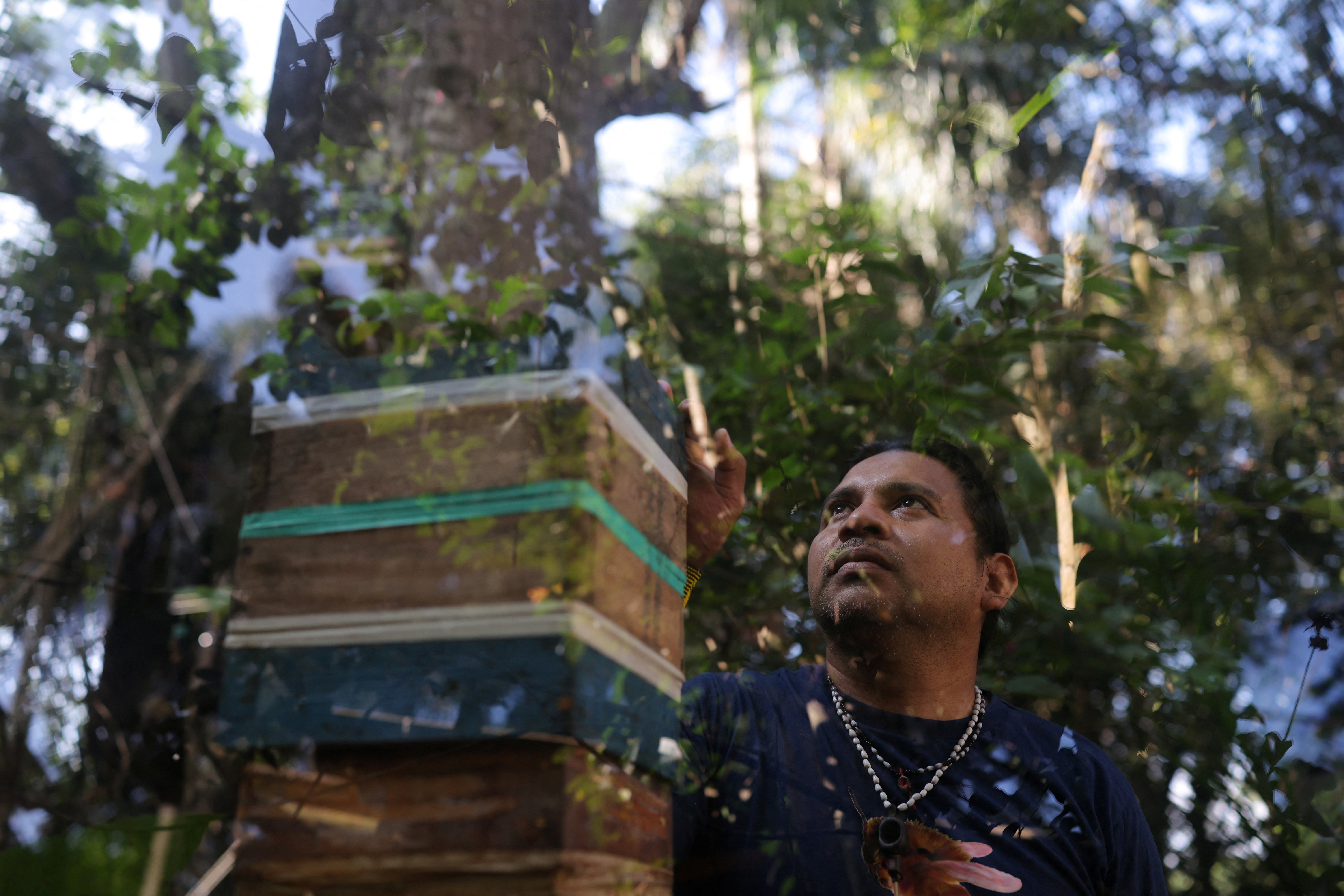
Marcio Karai, an indigenous leader and meliponiculturist from the Guarani community, is dedicated to preserving native stingless bee species in the Ytu village, located in the Jaraguá Indigenous Land near São Paulo. He is actively involved in transferring bee colonies to new hives, caring for 13 different native varieties, including Mirim and Jataí bees. Karai expressed deep concern from the elders about the diminishing presence of these native species, which were once readily available but are now increasingly scarce. While the Mirim bees are not currently classified as endangered, Karai worries about the future impact of ecosystem changes on these and other native pollinators. He highlights that global pollinator populations, including bees, face significant threats from climate change, deforestation, and pesticide use, jeopardizing global food security and wild plant reproduction. Meliponiculture, the practice of managing stingless bees, differs from European beekeeping, yielding smaller quantities of highly valued honey. Brazil hosts around 300 identified stingless bee species, though many may have gone extinct due to agricultural expansion. Karai views his community as guardians of these vital species for the ecosystem and future generations. The honey and wax produced are integral to Guarani religious ceremonies, with beeswax candles playing a ceremonial role in spiritual rituals. Karai learned beekeeping from his father and grandfather, hoping his son will continue the tradition, though he fears younger generations may prioritize higher-paying jobs. He identifies with the Jataí bee species, seeing its resilience as a parallel to the Guarani people's resistance against attempts at elimination.
This report highlights the critical role indigenous communities play in biodiversity conservation, particularly in safeguarding native stingless bee populations. The practice of meliponiculture, deeply intertwined with Guarani cultural and spiritual traditions, offers a model for sustainable beekeeping that prioritizes ecological balance over mass production. The concerns raised by Marcio Karai about ecosystem changes and the potential loss of traditional knowledge underscore systemic vulnerabilities. As global ecosystems face unprecedented pressure from climate change and habitat destruction, the long-term viability of these conservation efforts may depend on integrating indigenous practices with broader scientific and policy frameworks. Future generations face a trade-off between economic pressures and the preservation of invaluable ecological and cultural heritage, necessitating innovative approaches to ensure both community well-being and biodiversity survival in the coming decade.
AI-generated to prompt reflection — not editorial opinion, not advice, not a statement of fact. How this works.
