Indigenous Residents Build Temporary Bridge in Roraima After Original Collapses
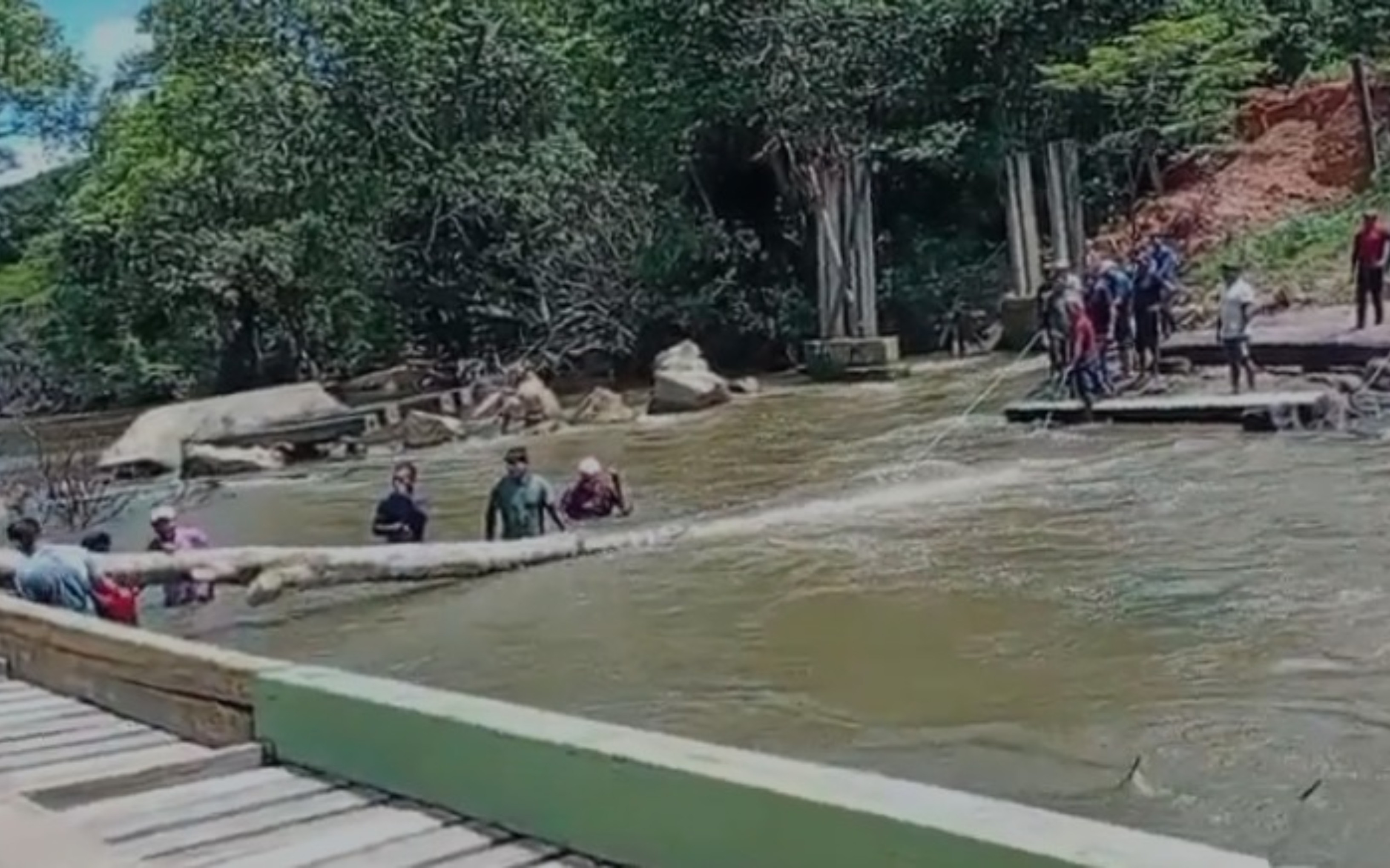
Indigenous residents in the Jacamim community, located in Roraima, Northern Brazil, have taken matters into their own hands by constructing an improvised bridge. This action comes after the original bridge, which provided access to seven indigenous communities, collapsed on May 23 due to heavy rains. The community's leader, tuxaua Adilson de Souza, expressed frustration over the delay in a permanent solution, highlighting the severe impact on daily life. The lack of proper infrastructure prevents the circulation of school and health vehicles, and hinders the transportation of agricultural produce. For months, residents have relied on the Fire Department for canoe crossings for motorcycles, but they are demanding a concrete bridge. The collapsed bridge, built only three years ago, was a replacement for a previous structure also destroyed by water. Currently, six communities comprising approximately 440 families are isolated. The Bonfim municipality stated the bridge is on a state highway (RR-207), a responsibility of the Roraima state government, though they are providing support. The State Secretariat of Infrastructure announced that work on the permanent bridge at km 127.82 is expected to begin by the end of the current week. Residents also face difficulties with roads, characterized by potholes, mud, and impassable sections.
The situation in Roraima highlights critical infrastructure deficits impacting remote indigenous communities. The reliance on improvised solutions underscores the challenges of maintaining essential services when formal governmental responses are delayed. This event prompts reflection on the long-term sustainability of infrastructure projects in regions prone to environmental hazards and the equitable distribution of state resources. Future planning should consider climate resilience and community-led maintenance models to mitigate the effects of natural disasters and ensure continuous access for education, healthcare, and economic activities, thereby fostering greater autonomy and well-being for these populations.
AI-generated to prompt reflection — not editorial opinion, not advice, not a statement of fact. How this works.