Indonesia Streamlines Regulations to Accelerate Waste-to-Energy Projects
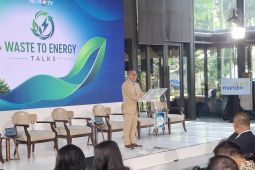
Indonesia has significantly simplified its regulatory framework to expedite the development of waste-to-energy (WTE) projects across the nation. The government has drastically reduced the number of requirements, cutting hundreds of stipulations down to a much smaller set. This move aims to overcome bureaucratic hurdles that have previously slowed down the implementation of crucial WTE infrastructure. The initiative is expected to attract more investment and accelerate the construction of facilities designed to convert waste into usable energy. By removing these regulatory bottlenecks, Indonesia hopes to address its growing waste management challenges while simultaneously increasing its renewable energy capacity. This policy shift is a strategic effort to boost both environmental sustainability and energy security.
The Indonesian government's decision to simplify WTE project regulations reflects a pragmatic approach to addressing dual challenges of waste management and energy security. By reducing regulatory complexity, the administration seeks to incentivize private sector investment and accelerate project deployment, aligning with global trends towards circular economy principles and renewable energy adoption. This policy shift could foster innovation in waste processing technologies and create new economic opportunities. However, successful implementation will depend on robust oversight mechanisms to ensure environmental standards are maintained and that local communities benefit equitably from these developments. The long-term viability will also be influenced by evolving energy markets and the cost-competitiveness of WTE compared to other energy sources.
AI-generated to prompt reflection — not editorial opinion, not advice, not a statement of fact. How this works.