Indonesian Interior Minister: Quality Public Services Crucial for National Resilience
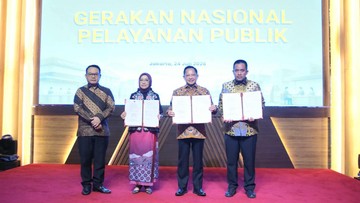
Indonesian Minister of Home Affairs, Tito Karnavian, has emphasized the critical role of high-quality public services in ensuring national resilience. He stated that robust public services are fundamental to a strong and stable nation. To achieve this, Karnavian highlighted the importance of strengthening the Civil Service Apparatus (ASN). He announced his support for the National Movement for Public Services, an initiative aimed at enhancing the capabilities and performance of public servants across the country. This movement is expected to foster a culture of excellence and efficiency within the ASN. The Minister believes that by improving how public services are delivered, the government can better meet the needs of its citizens and bolster the country's overall stability and security. The initiative seeks to align public service delivery with national strategic goals, ensuring that government functions effectively support the nation's resilience.
The Indonesian government's focus on enhancing public service quality as a cornerstone of national resilience reflects a strategic understanding of the link between citizen satisfaction and state stability. By investing in the Civil Service Apparatus and promoting initiatives like the National Movement for Public Services, the administration aims to improve governmental efficiency and responsiveness. This approach can be viewed through the lens of governance effectiveness and its impact on public trust. In the long term, a more capable and citizen-centric public service could foster greater social cohesion and economic development. However, the success of such movements hinges on sustained commitment to reform, transparent performance metrics, and robust mechanisms for accountability within the ASN, ensuring that improvements translate into tangible benefits for the populace and genuinely strengthen national resilience against various internal and external challenges.
AI-generated to prompt reflection — not editorial opinion, not advice, not a statement of fact. How this works.