Indonesian National Police Chief Appoints Six New Regional Police Chiefs and Traffic Corps Head
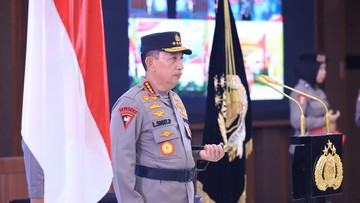
General Listyo Sigit Prabowo, the Chief of the Indonesian National Police (Kapolri), has officially appointed six new Regional Police Chiefs (Kapolda) and the new Head of the Traffic Corps (Kakorlantas). The ceremony took place at the National Police Headquarters (Mabes Polri). This reshuffling of high-ranking positions is intended to refresh leadership and enhance the overall effectiveness of the police force. The appointments signify a strategic move by the Kapolri to ensure optimal performance and operational readiness across key police commands. These changes are expected to bring new perspectives and drive to the respective departments. The specific regions or departments affected by these Kapolda appointments were not detailed in the provided information. The new Kakorlantas will oversee national traffic management and enforcement strategies. This leadership transition is a routine process aimed at maintaining a dynamic and responsive police organization.
The appointment of new regional police chiefs and the head of the traffic corps by the Indonesian National Police Chief represents a standard administrative process aimed at optimizing organizational performance. Such leadership changes are often driven by a need for fresh perspectives, addressing performance metrics, or preparing for future challenges. From a governance perspective, these transitions are crucial for maintaining accountability and ensuring that law enforcement agencies adapt to evolving societal needs and security landscapes. The focus on 'effectiveness' suggests a performance-oriented approach, which, while beneficial, requires clear metrics and oversight to prevent unintended consequences or the prioritization of easily quantifiable outcomes over more complex public safety goals. Looking ahead, the effectiveness of these appointments will be measured by their contribution to public trust, crime reduction, and the efficient administration of justice within their respective jurisdictions.
AI-generated to prompt reflection — not editorial opinion, not advice, not a statement of fact. How this works.