Indonesian Parliament Committee: No Rule Requires Presidential Permission to Arrest Prosecutors
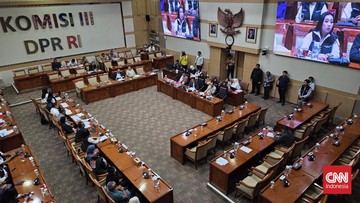
Soedeson Tandra, a member of Commission III of the Indonesian House of Representatives (DPR RI), has stated that there is no existing regulation mandating law enforcement officials to obtain presidential permission before arresting a prosecutor involved in a case. This clarification addresses the legal framework surrounding the apprehension of prosecutors, emphasizing that such a requirement does not exist within current Indonesian law. The statement aims to provide clarity on the procedures and authorities involved in prosecuting legal officials. Commission III of the DPR RI oversees legal affairs, human rights, and security, making its pronouncements on such matters significant. Tandra's assertion underscores the principle that all individuals, including those in judicial positions, are subject to the law. The absence of a specific rule for presidential consent suggests that standard legal procedures apply to prosecutors facing criminal charges. This stance is crucial for maintaining the integrity of the justice system and ensuring accountability among all its members. The committee's role is to deliberate on legislation and policy, and this statement clarifies an interpretation of existing legal provisions.
This statement from a member of the Indonesian House of Representatives' Commission III clarifies a potential legal ambiguity regarding the prosecution of public officials. By asserting the absence of a rule requiring presidential consent for arresting a prosecutor, the statement reinforces the principle of equal application of the law. This perspective aligns with governance structures that aim to prevent undue influence or obstruction in judicial processes. From a systemic viewpoint, ensuring that law enforcement can act without requiring higher-level political approval for arrests of judicial personnel is crucial for maintaining judicial independence and public trust. The focus is on upholding legal processes and accountability mechanisms within the justice sector, irrespective of an individual's position. This approach supports a more robust and transparent legal framework, essential in any democratic society.
AI-generated to prompt reflection — not editorial opinion, not advice, not a statement of fact. How this works.