Indonesian Parliament Forms Committee to Oversee Corruption Cases After Prosecutor Becomes Suspect
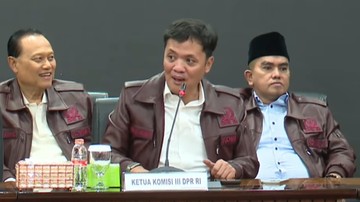
The Indonesian House of Representatives' Third Commission (Komisi III DPR) has established a special working committee (panja) to monitor the handling of three corruption cases. This decision was made following the designation of Febrie Adriansyah, the former Junior Attorney General for Special Crimes (Jampidsus), as a suspect. The committee's formation aims to ensure transparency and proper oversight in the ongoing investigations. The specific details of the three corruption cases being monitored have not been fully disclosed. However, the involvement of a high-ranking former prosecutor as a suspect has raised significant public interest and scrutiny. The Komisi III DPR's action underscores the legislative body's role in maintaining accountability within the justice system. This move is expected to bring more attention to the anti-corruption efforts within the country. The committee will likely review the procedures and progress of these cases to ensure they are being handled impartially and effectively. The designation of Febrie Adriansyah as a suspect marks a critical development in the fight against corruption in Indonesia.
The establishment of a special working committee by Komisi III DPR to oversee corruption cases, particularly after a former high-ranking prosecutor became a suspect, signals a legislative effort to ensure accountability and transparency in the justice system. This action can be viewed through the lens of checks and balances, where the legislature seeks to monitor the executive and judicial branches' handling of sensitive investigations. The move may reflect public or institutional concerns about potential impropriety or undue influence in high-profile corruption probes. From a systemic perspective, such oversight mechanisms are crucial for maintaining public trust in law enforcement and judicial processes, especially in a developing democracy. The committee's effectiveness will depend on its independence, access to information, and the political will to address any irregularities, potentially setting precedents for future investigations and reinforcing the principle that no individual is above scrutiny, regardless of their former position.
AI-generated to prompt reflection — not editorial opinion, not advice, not a statement of fact. How this works.