Industrial AI Startup "ZhuiZhi GongKe" Secures Tens of Millions in Seed Funding
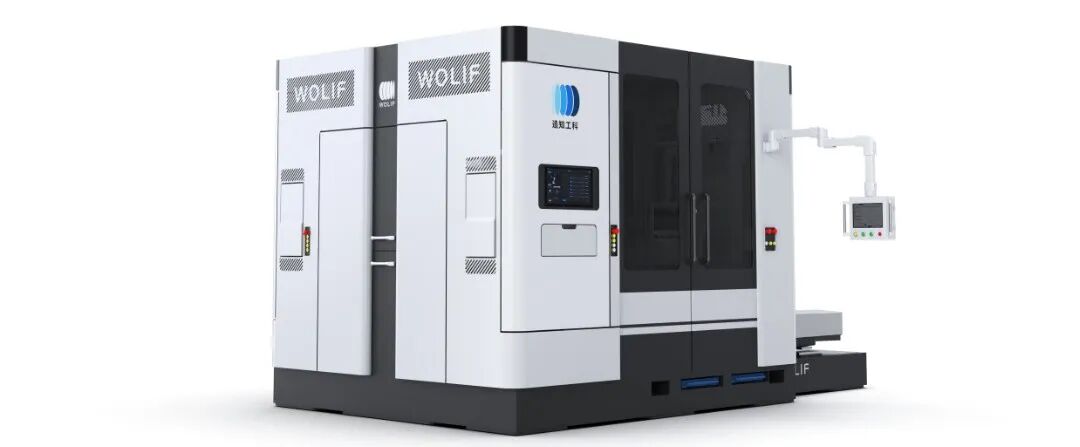
Shanghai ZhuiZhi GongKe Technology Co., Ltd. (ZhuiZhi GongKe), a technology enterprise specializing in domain-specific industrial intelligent agents, has successfully closed a seed funding round of tens of millions of yuan. The investment was led by L2F Optoelectronics Entrepreneur Fund, Shangrong Capital, and Yicun Capital. This funding will be allocated towards core product research and development, team expansion, and market penetration. Founded in February 2024, ZhuiZhi GongKe aims to integrate artificial intelligence into industrial manufacturing processes to enhance automation and intelligence in complex foundational manufacturing steps. The company specifically addresses challenges such as flexible production and a severe shortage of skilled labor in the manufacturing sector. The company's founder, Yuan Lin, previously served as a business partner at Feixi Technology, contributing to its growth into a unicorn. He also held executive positions at Huachangda, a listed intelligent equipment group, and led significant production line projects at ABB China. ZhuiZhi GongKe's core team comprises experts in both technology and industry, including Professor Li Zhuguo from Shanghai Jiao Tong University's School of Materials Science and Engineering, and Dr. Cao Guangzhi, formerly a lead scientist at Tesla Autopilot. The company's product, the WOLIF Industrial Agentic Robot, utilizes a proprietary industrial brain and a closed-loop control architecture that enables real-time, dynamic adjustments to manufacturing processes, moving beyond the limitations of traditional, pre-programmed automation. ZhuiZhi GongKe has already secured its first delivery with an A-share listed company and a multi-million yuan order in the aerospace manufacturing sector, validating its first-generation surface treatment intelligent agent and AI industrial control system.
ZhuiZhi GongKe's focus on domain-specific industrial intelligent agents, rather than general-purpose humanoid robots, reflects a strategic understanding of the current limitations in traditional industrial automation. By targeting complex, non-standardized manufacturing processes that heavily rely on human expertise, the company is addressing a clear market gap. The emphasis on integrating material science principles with AI and hardware optimization suggests a robust approach to developing truly intelligent systems capable of understanding and adapting to physical processes. This strategy, if successful, could lead to significant gains in efficiency and quality in high-value manufacturing sectors like aerospace and new energy. The company's success will likely hinge on its ability to demonstrate the scalability and adaptability of its "industrial brain + process cerebellum" system across different materials and manufacturing scenarios, moving beyond initial niche applications to broader industrial adoption over the next decade.
AI-generated to prompt reflection — not editorial opinion, not advice, not a statement of fact. How this works.