Insect Species on Earth May Be Double Previous Estimates, New Study Reveals
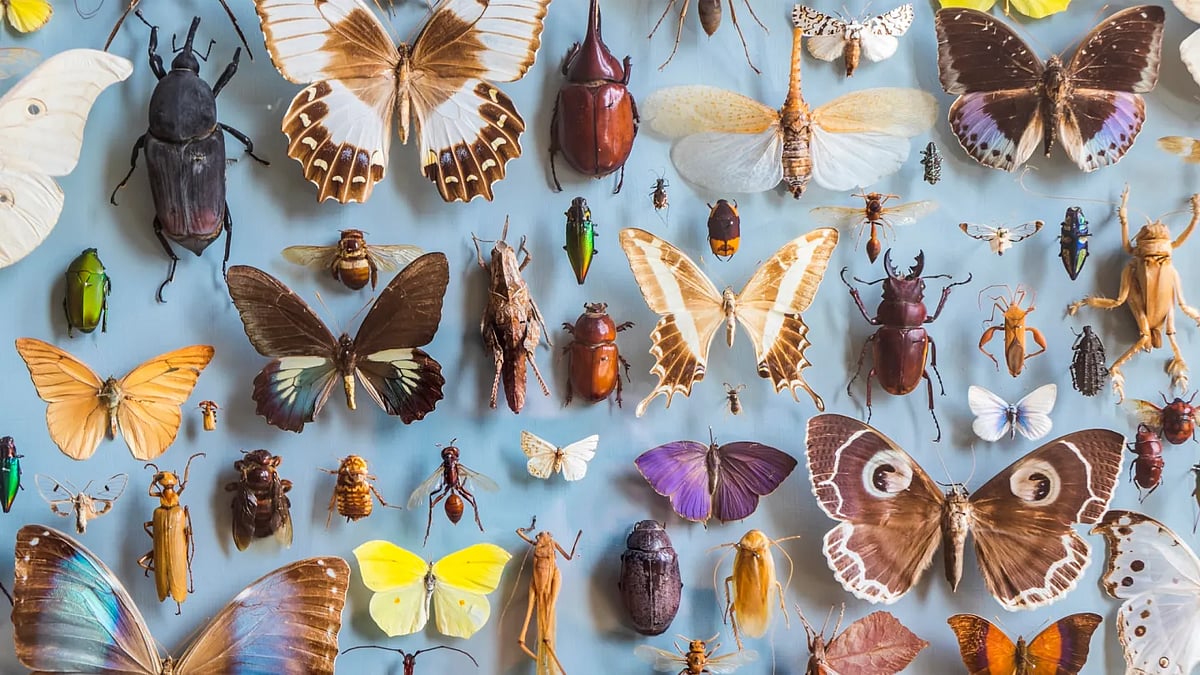
A groundbreaking study published in the Proceedings of the National Academy of Sciences has dramatically revised estimates for the number of insect species on Earth. For four decades, scientists widely believed there were around 6 million insect species. However, this new research suggests the actual number could be between 14 million and 20 million, meaning a significant majority of insect species remain undiscovered.
The study, co-authored by entomologists Robert Colwell from the University of Colorado and the University of Connecticut, highlights the immense challenge of accurately cataloging these small, often elusive creatures. Researchers focused on a specific group of parasitic wasps, known as microgastrines, in Costa Rica's Guanacaste Conservation Area. By employing three different trapping methods—two types of Malaise traps and direct collection of caterpillars for lab observation—they aimed to gauge the completeness of their sampling.
Analyzing the data, particularly the distribution of the discovered wasps, researchers developed statistical models to estimate the number of undiscovered species. This analysis revealed that an additional 8 million to 14 million species of insects likely exist beyond current scientific knowledge. Many of these unknown species are thought to be small, rare, and highly specialized, often living in habitats like forest canopies or within complex food webs that are difficult for scientists to access and study. The findings underscore the vastness of Earth's biodiversity and the urgent need to understand and protect these species, especially as insect populations face rapid decline due to human activities.
This research challenges long-held assumptions about insect biodiversity, suggesting our understanding of the planet's most diverse animal group is significantly incomplete. The study's methodology, using parasitic wasps as indicators and sophisticated statistical modeling, addresses the inherent difficulties in cataloging elusive species. The revised estimates imply that a vast number of insect species, potentially millions, are unknown to science. This has critical implications for conservation efforts, as species cannot be protected if their existence is not recognized. The findings highlight the potential for significant gaps in our knowledge of ecological webs and the services insects provide, emphasizing the need for continued biodiversity research and habitat preservation to mitigate ongoing declines.
AI-generated to prompt reflection — not editorial opinion, not advice, not a statement of fact. How this works.