Inside Louis Vuitton's 165-Year-Old Historic Family Home and Factory
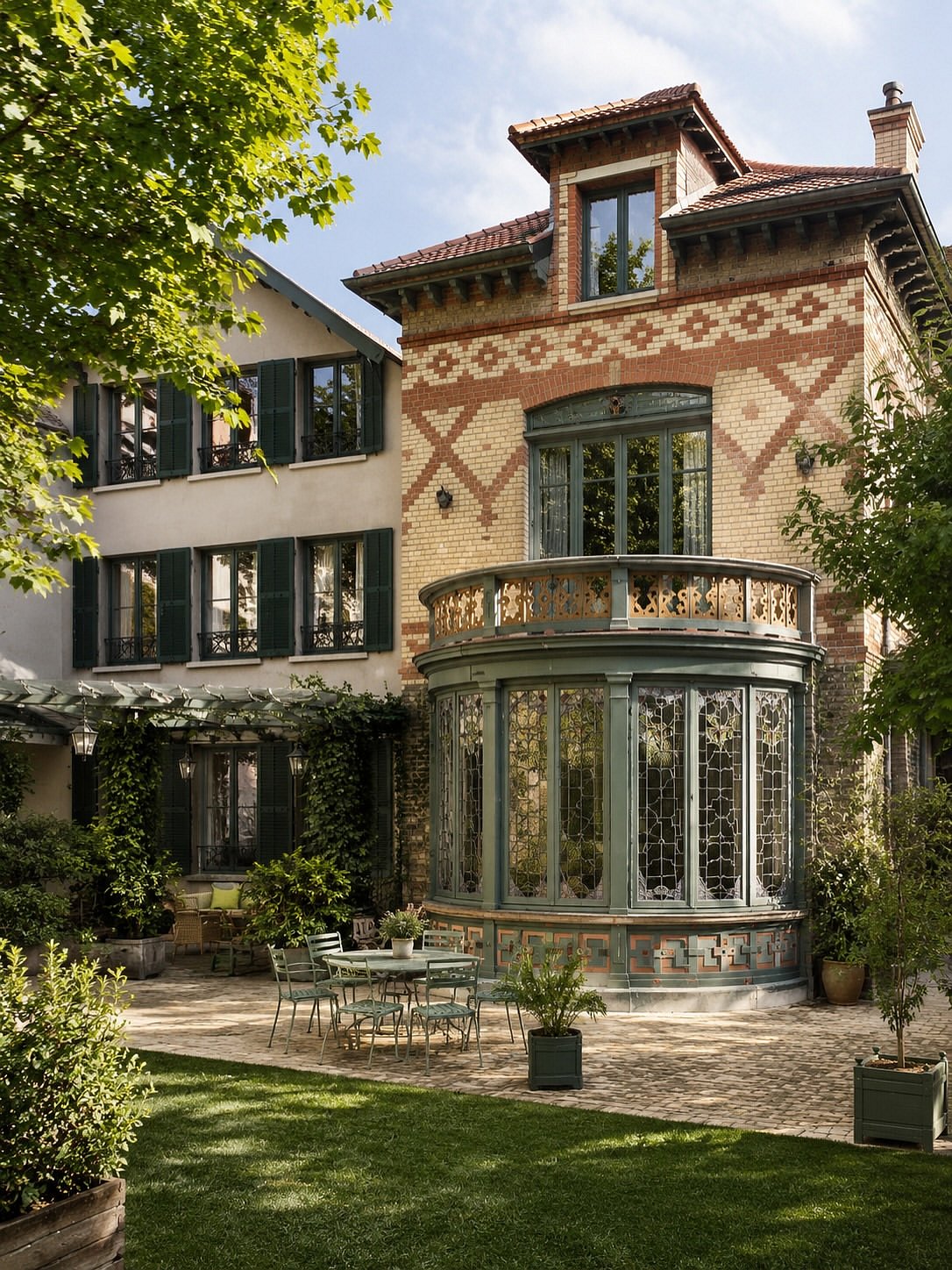
The historic Louis Vuitton family home and factory in Asnières-sur-Seine, near Paris, France, stands as a testament to the luxury fashion house's origins. Louis Vuitton established his home and a factory on this site just five years after launching his brand. Built in 1859, the original factory was a state-of-the-art structure featuring metal pillars and beams, producing the exceptional trunks and bags that propelled Louis Vuitton to global fame.
Today, the Asnières estate remains a vital part of the brand's heritage, though not continuously inhabited by the current generation. It serves as a site for weekend retreats and continued craftsmanship. Initially, the ground floor housed the factory, with family quarters above. A separate residence was built for the family in 1869. The factory continues to operate, exclusively crafting bespoke trunks by hand. A gallery within the estate showcases early Louis Vuitton products from 1874 and rare trunk designs. For decades, until 1977, the Asnières factory was Louis Vuitton's sole production center.
The significance of this historic location is profound; new employees at the Paris headquarters are brought here to learn about the brand's heritage, and VIP clients are also given tours. While Louis Vuitton himself prioritized comfort and family warmth, his son Georges Vuitton and daughter-in-law Josephine enhanced the home with Art Nouveau decor after his death in 1892. Josephine was the last family member to reside there full-time, greeting factory workers each morning. Following Josephine's death in 1964, the home's furnishings were distributed, and the property briefly served as storage and office space before undergoing renovations in the mid-1980s to restore its original character. The exhibition space was relocated to an adjacent building, displaying items from an 1865 dome-shaped trunk to contemporary pieces. The residence features floral motifs, a distinctive celadon-green fireplace (the original was lost after being sealed during renovations), and intact stained-glass windows from the 1890s depicting various flowers. These windows, some with clear sections, allowed Georges Vuitton to discreetly monitor factory activities, a precursor to modern surveillance.
The preservation and continued use of the Asnières estate highlight a strategic approach to brand heritage management in the luxury sector. By maintaining this historical site as a functional workshop and a place for indoctrination of new staff and VIPs, Louis Vuitton reinforces its narrative of artisanal craftsmanship and legacy. This dual role—as a living museum and an active production hub—serves to authenticate the brand's value proposition in an era increasingly dominated by digital experiences and mass production. The integration of historical elements, such as Georges Vuitton's discreet monitoring via stained-glass windows, offers a subtle nod to innovation and foresight, framing the brand's journey as one of continuous evolution rooted in tradition. This carefully curated presentation aims to foster emotional connection and perceived authenticity among consumers, a critical differentiator in the competitive luxury market.
AI-generated to prompt reflection — not editorial opinion, not advice, not a statement of fact. How this works.