Insulator-Free Topological Photonic Highways Enable Multi-Lane Light Transmission
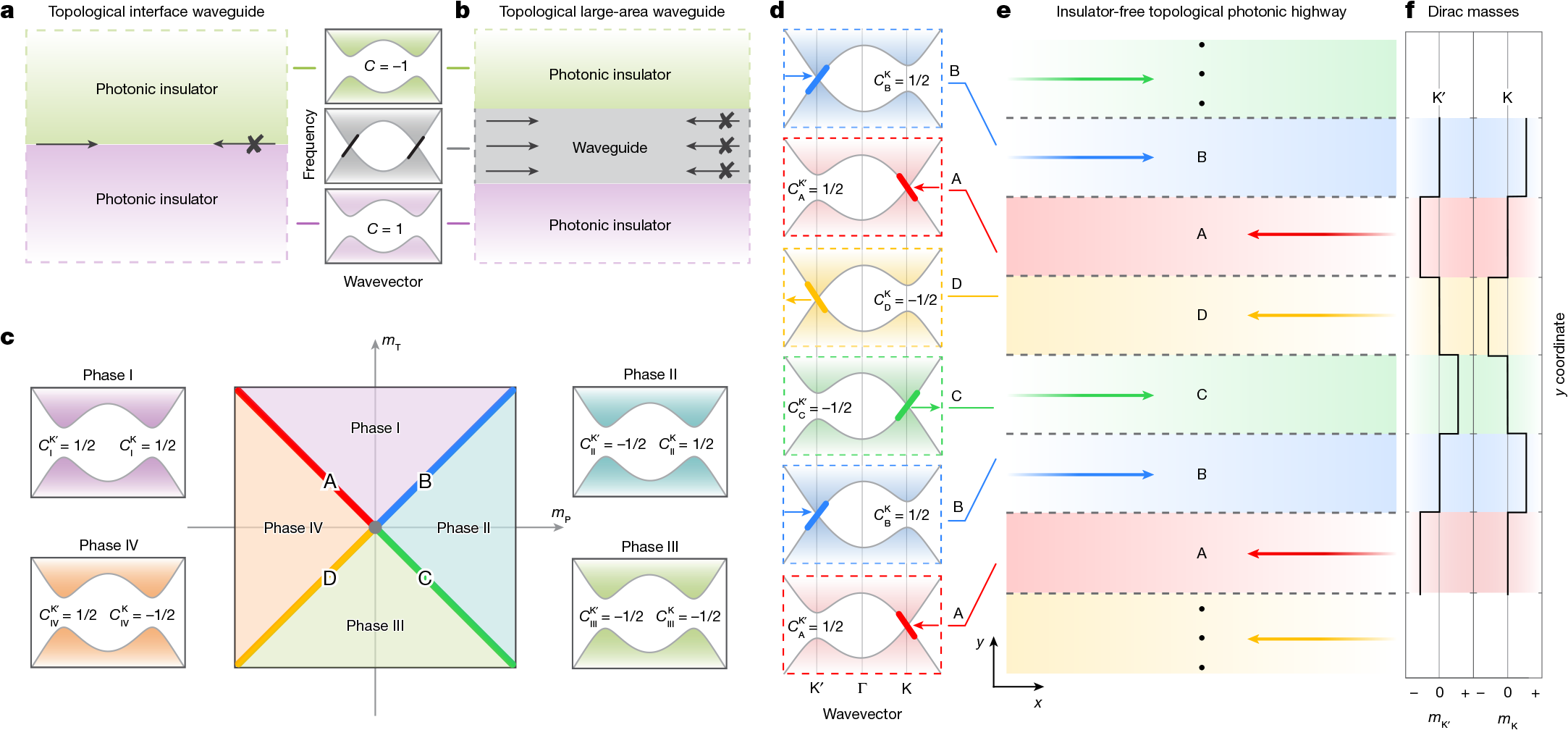
Researchers have developed a novel approach to creating topological photonic multi-lane highways, a significant advancement in optical communication. This new method eliminates the need for insulating materials, which were previously required to guide light and prevent scattering. The innovative design allows for multiple lanes of light to travel simultaneously without interference. This breakthrough is expected to enhance the efficiency and capacity of optical networks. The topological properties of these photonic structures ensure robust light propagation, even in the presence of defects or imperfections. This development could pave the way for more sophisticated optical computing and communication systems. The absence of insulators simplifies fabrication and potentially reduces costs. The multi-lane capability addresses the growing demand for higher bandwidth in data transmission. This research marks a crucial step towards realizing next-generation photonic devices.
This advancement in topological photonics addresses a key challenge in optical communication by removing the necessity for insulating materials. This innovation could lead to more efficient and cost-effective fabrication of photonic devices. The development of multi-lane highways for light transmission has the potential to significantly increase data carrying capacity, aligning with the escalating demands of the digital age. Future systems may leverage these properties for enhanced optical computing and integrated photonic circuits, offering a pathway to overcome current bandwidth limitations. The robustness inherent in topological structures suggests a future where optical signals are less susceptible to environmental disturbances or manufacturing imperfections.
AI-generated to prompt reflection — not editorial opinion, not advice, not a statement of fact. How this works.