Integrated Efforts Urged for Child Development and Climate Protection
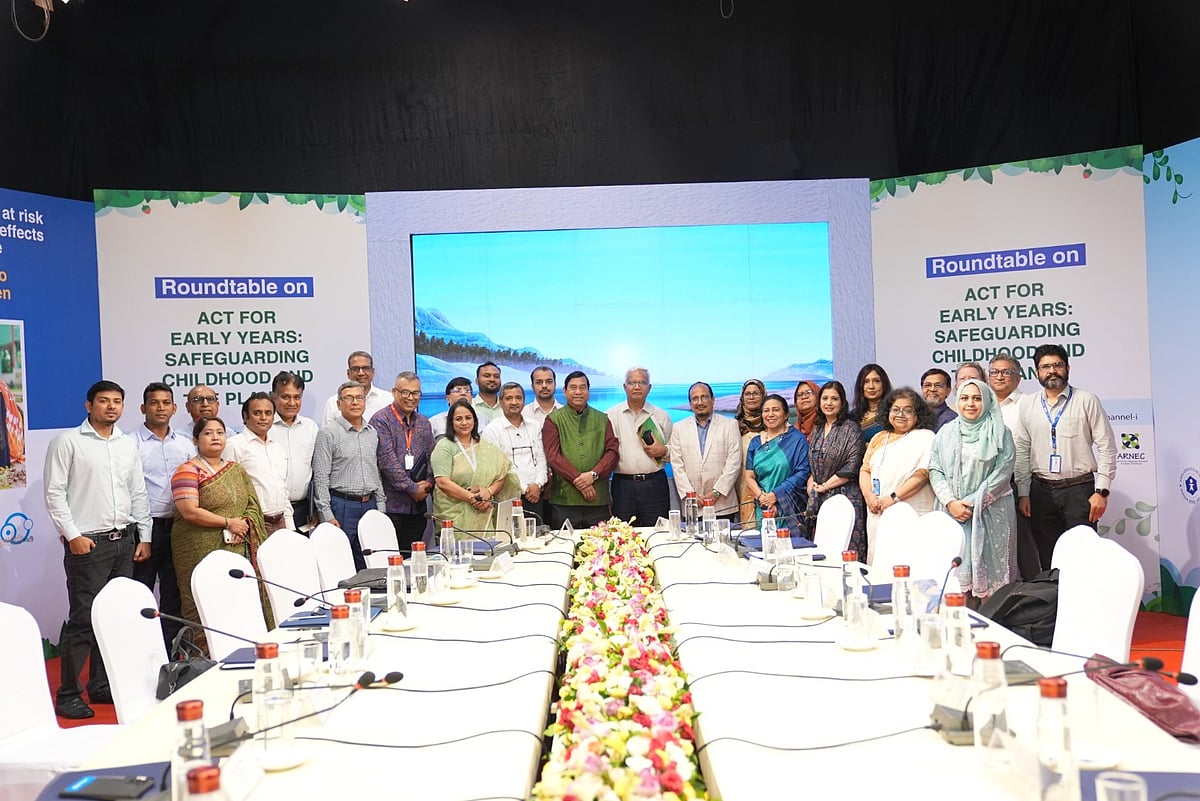
Policymakers, development experts, and civil society representatives have called for a unified approach involving the government, development partners, civil society, media, and families to address the climate crisis and ensure early childhood development. This call was made during a policy dialogue in Dhaka titled 'Actions for Childhood: Securing Childhood and the Earth.' Speakers emphasized that creating a safe and nurturing environment for children is intrinsically linked to environmental conservation, asserting that protecting the planet is essential for securing a safe future for children.
The event, jointly organized by the Bangladesh Early Childhood Development Network (BEN) and the Nature & Life Foundation, with support from Arnek and Somoshti Media Communication and Development Foundation, highlighted the critical importance of the first thousand days of a child's life for their physical, mental, and intellectual growth. The Minister of Women and Children Affairs, A Z M Zahid Hossain, stated that investing in early childhood development is not an expense but a crucial investment in the nation's future, requiring effective policies, adequate funding, and coordinated actions to ensure children's safety amidst global challenges like climate change. Participants also stressed the need to integrate health, nutrition, education, protection, and psychosocial development for children, advocating for increased investment in child-centric climate adaptation and sustainable development due to rising climate-related risks for children. Representatives from various organizations, including UNICEF, UNESCO, and Save the Children, participated in the discussion, underscoring the necessity of prioritizing children's rights and environmental protection in national development plans.
The dialogue highlights a critical intersection between child welfare and environmental sustainability, framing them as interdependent challenges. The call for integrated efforts across government, civil society, and international partners suggests a recognition of the systemic nature of these issues. From a future-oriented perspective, the emphasis on early childhood investment as a long-term societal benefit aligns with demographic and human capital development trends. The discussion implicitly points to the need for robust governance mechanisms that can translate policy dialogues into tangible, coordinated actions, particularly in resource allocation and program implementation, to effectively address both immediate child needs and the escalating impacts of climate change on vulnerable populations.
AI-generated to prompt reflection — not editorial opinion, not advice, not a statement of fact. How this works.
