Internal Greek Politics: Pre-Election Strategy Debates Intensify Amidst Polls
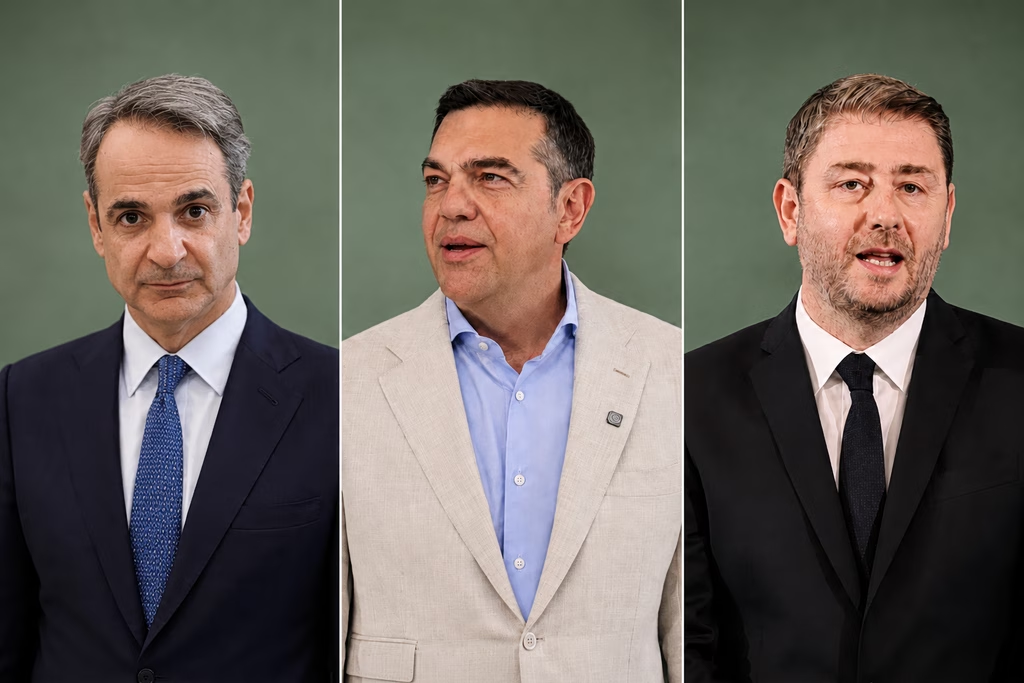
The ruling New Democracy (ND) party and the Maximos Mansion are facing internal challenges as recent opinion polls do not favor arguments for either early elections this autumn or holding out until the scheduled end of the term in 2027. Those advocating for an earlier vote are concerned that the party may not achieve sufficient consolidation even if an election is called. Conversely, those who prefer to serve the full term are also finding their positions undermined by the current political climate. The discrepancy between the party's desired narrative and the public's perception, as reflected in the polls, is creating significant strategic dilemmas for the leadership. This situation highlights a growing tension within the party regarding the optimal timing and strategy for the upcoming electoral period. The ongoing debate suggests a lack of consensus on how best to navigate the political landscape and secure electoral success.
The internal political discourse within Greece's New Democracy party, as indicated by the debate over election timing, reflects a common challenge for incumbent governments: aligning public perception with strategic objectives. Fluctuations in polling data can create divergent pressures, forcing leaders to weigh the perceived benefits of immediate action against the risks of prolonged uncertainty. This dynamic is amplified in the current era, where rapid information dissemination can quickly shape public sentiment. The party's leadership must navigate these competing interests, considering factors such as voter consolidation, economic conditions, and the broader geopolitical landscape. The challenge lies in developing a cohesive strategy that can adapt to evolving public opinion and maintain electoral viability over the medium term, rather than reacting solely to short-term polling trends.
AI-generated to prompt reflection — not editorial opinion, not advice, not a statement of fact. How this works.