Interstellar Comet 3I/ATLAS Origins Probed by VLT and JWST Observations
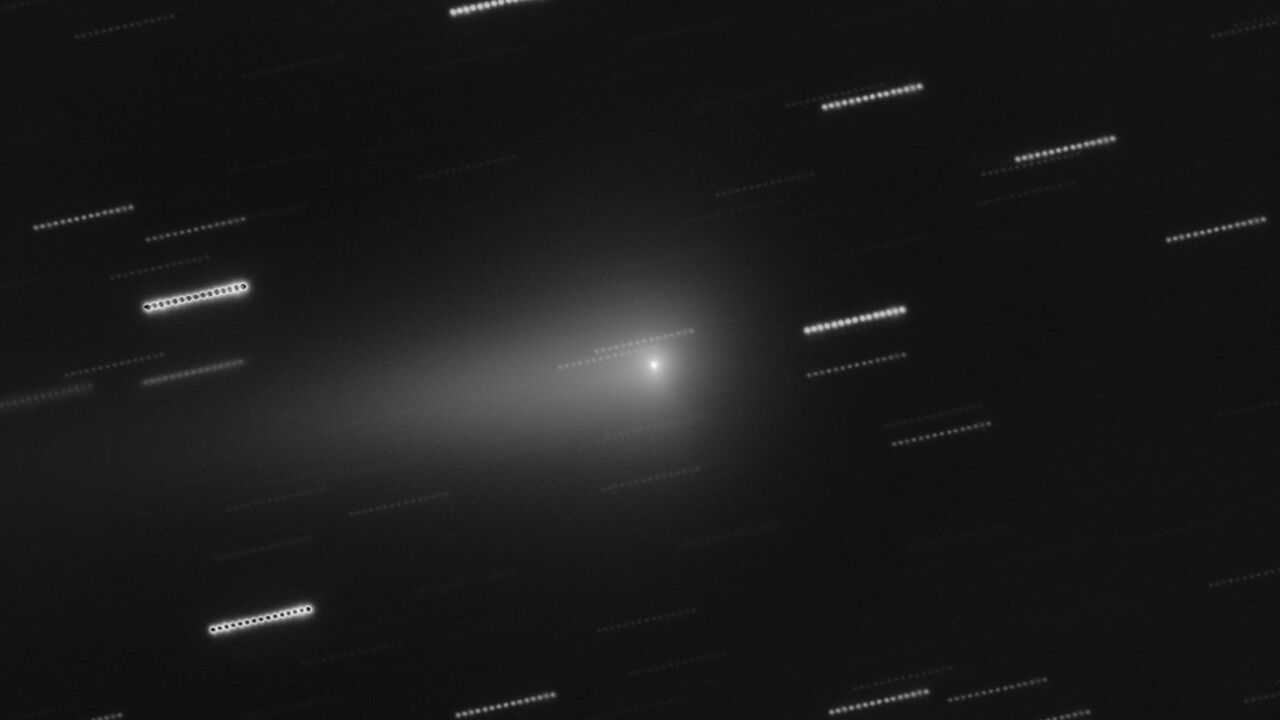
New observations of the interstellar comet 3I/ATLAS have provided further insights into its origins. Scientists utilized the Very Large Telescope (VLT) in Chile to study the fast-moving celestial object. These findings align with and support earlier observations made by the James Webb Space Telescope (JWST). The comet's trajectory and composition are being analyzed to understand its journey through interstellar space. This dual observation approach allows for a more comprehensive understanding of comets originating from outside our solar system. Such studies are crucial for understanding the diversity of objects in the galaxy and the processes that shape them. The data gathered from both the VLT and JWST will contribute to refining models of cometary formation and evolution. Further analysis is expected to shed more light on the unique characteristics of 3I/ATLAS.
The coordinated observations of interstellar comet 3I/ATLAS by both the Very Large Telescope and the James Webb Space Telescope represent a significant advancement in astronomical research. This collaborative approach, leveraging distinct observational capabilities, enhances the scientific community's ability to characterize extralunar objects. By cross-referencing data, researchers can mitigate individual instrument biases and build a more robust understanding of the comet's physical properties and origin. This synergy highlights the evolving methodologies in astrophysics, where multi-observatory campaigns are becoming increasingly vital for tackling complex cosmic phenomena. The insights gained could refine our models of planetary system formation and the distribution of materials across the galaxy, offering a glimpse into the broader context of celestial evolution over the next decade.
AI-generated to prompt reflection — not editorial opinion, not advice, not a statement of fact. How this works.