Iran After Khamenei's Funeral: A Moment Resembling China's Post-Mao Era
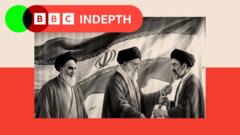
Following the funeral of Iran's Supreme Leader Ayatollah Ruhollah Khomeini, a prominent analyst, Vali Nasr, has drawn a parallel to China's post-Mao Zedong era. Nasr suggests that Iran is at a critical juncture where the entire political system recognizes the necessity for change. He posits that the emerging leadership understands the urgent need to establish a new social contract with the populace. This comparison implies a period of potential reform and redefinition of the state's relationship with its citizens. The analogy highlights a moment of systemic introspection and the acknowledgment of evolving societal expectations. The transition period following a long-standing leader often presents opportunities for policy shifts and ideological recalibrations. The effectiveness of this new social contract will likely depend on the leadership's ability to address deep-seated grievances and adapt to changing domestic and international dynamics. This historical parallel underscores the potential for significant, albeit uncertain, transformations within Iran's governance structure.
The comparison of Iran's post-Khamenei period to China's post-Mao era suggests a potential systemic recognition of the need for adaptation. This historical parallel implies that the Iranian regime, like its Chinese counterpart decades ago, may be facing internal pressures to reform its social contract and governance model. Such transitions often involve navigating complex internal power dynamics and external geopolitical considerations. The challenge for the new leadership will be to balance the preservation of the existing system's core tenets with the imperative to address evolving societal demands and maintain stability. The effectiveness of any proposed reforms will be a critical determinant of Iran's future trajectory, influencing its domestic cohesion and international relations over the next decade.
AI-generated to prompt reflection — not editorial opinion, not advice, not a statement of fact. How this works.