Iran After Khamenei's Funeral: Echoes of China's Post-Mao Era
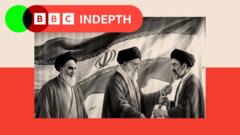
Following the funeral of Iran's Supreme Leader Ayatollah Ali Khamenei, a political analyst has drawn a parallel to China's post-Mao Zedong period. The observation suggests a moment of significant institutional realization within Iran. According to the analyst, the entire system recognizes the necessity for change. This new leadership, it is believed, understands the need to forge a new social contract with the populace. The comparison implies a potential shift in Iran's political and social landscape as it navigates a transition. Such periods often involve reassessments of existing policies and a search for new directions to address societal demands and maintain stability. The analogy points to a critical juncture where established structures confront the imperative to adapt to evolving circumstances and public expectations.
The comparison of Iran's post-Khamenei period to China's post-Mao era highlights a potential inflection point for the Iranian state. This analogy suggests that, much like China experienced after Mao's death, Iran's leadership may face pressure to reform its governance model and social contract. The core challenge for any successor regime in such a transition is balancing ideological continuity with the pragmatic need to address evolving public aspirations and economic realities. The next decade will likely reveal whether Iran's political system can adapt to maintain legitimacy and stability, or if internal contradictions will necessitate more fundamental systemic changes, particularly in light of global technological and geopolitical shifts.
AI-generated to prompt reflection — not editorial opinion, not advice, not a statement of fact. How this works.