Iran Begins Funeral Ceremonies for Assassinated Supreme Leader Ayatollah Ali Khamenei
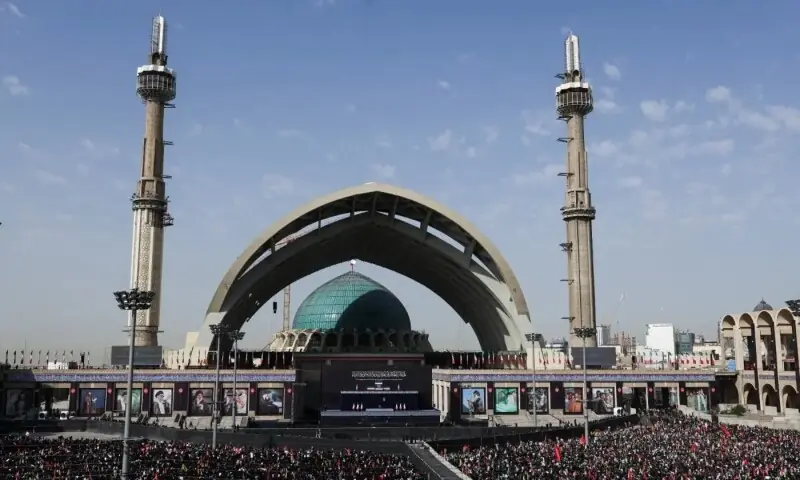
Funeral ceremonies for Iran's Supreme Leader Ayatollah Ali Khamenei, who was assassinated on February 28, officially commenced on Saturday, July 4, 2026, drawing thousands of mourners to Tehran. State television reported that Iranian authorities anticipate between 15 and 20 million participants in Tehran alone over the next three days for tributes to Khamenei, who led the country for 35 years. Six days of funeral events are planned, culminating in burial on Thursday in Mashhad, Khamenei's home city. The ceremonies will include a procession through Tehran on Monday, a visit to Qom on Tuesday, and a journey to Shia holy cities in Iraq before the final burial.
Thousands of mourners gathered at Tehran's Grand Mosalla religious complex, with some walking several kilometers to attend. Chants of "death to America" and "revenge, revenge" were heard. The events are under significant security measures, with roads blocked and airspace expected to be closed, marking the largest public event in Iran since 1989. The succession of Khamenei's son, Ayatollah Mojtaba Khamenei, who was named supreme leader a week after his father's killing but has not appeared publicly, is a key focus. Other officials, including Parliament Speaker Mohammad Bagher Ghalibaf and Ahmad Vahidi, who took over the Revolutionary Guards, have displayed grief. International dignitaries, including Pakistan's Prime Minister Shehbaz Sharif and Russia's ex-president Dmitry Medvedev, are attending, along with representatives from Hamas, Hezbollah, and the Taliban.
The extensive funeral ceremonies for Ayatollah Ali Khamenei, framed by Iranian state media as a demonstration of national unity and resolve following his assassination, serve multiple strategic objectives. Beyond honoring a long-serving leader, these events are designed to project an image of state resilience and popular support to both domestic and international audiences, particularly in the context of ongoing regional tensions and a recent conflict with the US and Israel. The significant public turnout, meticulously managed and broadcast, aims to consolidate national identity and reinforce the legitimacy of the Islamic Republic. The focus on the potential successor, Ayatollah Mojtaba Khamenei, highlights the internal dynamics of power transition within Iran's unique political structure, signaling continuity while acknowledging the uncertainties surrounding his public emergence. The participation of international figures, including those from nations mediating or opposing US-led policies, underscores Iran's efforts to leverage the event for diplomatic signaling and to counter perceived isolation. The emphasis on calls for vengeance, while emotionally resonant, also serves as a political tool to maintain public mobilization and justify future actions, balancing national mourning with a posture of defiance.
AI-generated to prompt reflection — not editorial opinion, not advice, not a statement of fact. How this works.