Iran Begins Seven-Day Funeral for Supreme Leader Ayatollah Ali Khamenei
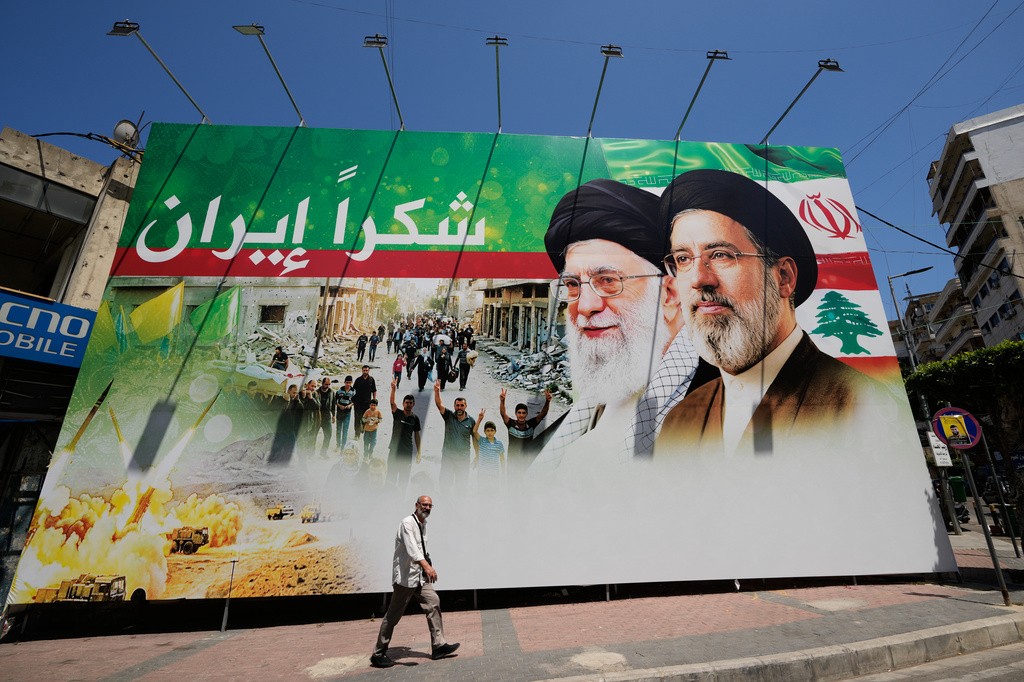
Iran has commenced a seven-day public funeral for Ayatollah Ali Khamenei, the Supreme Leader who died on February 28, 2026, following a joint attack by the U.S. and Israel. His son, Mojtaba Khamenei, has succeeded him. The funeral ceremonies began on Saturday, March 4th, with a private gathering on Friday, March 3rd, attended by government officials, military members, and international delegations from countries like Russia and China. The events are scheduled to continue until Thursday, March 9th.
Khamenei led Iran for nearly four decades, characterized by a rigid stance against reforms and forceful suppression of opposition. Internationally, he maintained a hostile posture towards the United States and refused to recognize Israel. His ascent to Supreme Leader in 1989 was unexpected, as he was not initially considered a prominent figure among the revolution's leaders and lacked the title of Ayatollah at the time. Born in Mashhad in 1939, Khamenei came from a devout, modest family and grew up during a period when Iran was allied with the U.S. and Israel under Shah Reza Pahlavi's monarchy. He became involved in anti-monarchy protests, leading to imprisonment and brief exile before the 1979 Islamic Revolution.
Following the revolution, Khamenei became a trusted confidant of Ayatollah Ruhollah Khomeini. He served as President of Iran from 1981 to 1989 after surviving a bombing in 1981 that paralyzed his right hand. During his presidency and subsequent leadership, Iran's foreign policy shifted dramatically, becoming openly hostile to the U.S. and advocating for Israel's elimination. This era also saw Iran begin funding groups like Hezbollah and Hamas. As Supreme Leader, Khamenei held ultimate political and religious authority, overseeing strategic decisions, foreign policy, and military affairs, with the power to overrule the president and dismiss government officials. His rule was marked by the suppression of dissent, including the Green Movement protests in 2009, fuel price protests in 2019, and demonstrations following the death of Mahsa Amini in 2022. Economic hardship, exacerbated by Western sanctions related to Iran's nuclear program and recent U.S.-Israeli attacks in June 2025, has fueled widespread public dissatisfaction and protests, some of which resulted in thousands of deaths earlier this year. Khamenei had previously survived an assassination attempt in 1981 and recovered from cancer in 2014.
The passing of Ayatollah Ali Khamenei marks a significant transition for Iran, concluding a nearly four-decade tenure characterized by internal consolidation of power and external confrontation. His leadership navigated the complexities of maintaining a theocratic state amidst evolving geopolitical pressures and domestic economic challenges. The succession by his son, Mojtaba Khamenei, raises questions about the continuity of Iran's political trajectory and the potential for internal power dynamics to shift. The narrative of foreign-backed attacks as the cause of his demise, while serving domestic political messaging, highlights the persistent tensions between Iran and Western powers, particularly the U.S. and Israel. Future Iranian policy will likely be shaped by the need to balance ideological commitments with economic realities, manage internal dissent, and respond to regional security concerns, all within the context of an increasingly complex global landscape.
AI-generated to prompt reflection — not editorial opinion, not advice, not a statement of fact. How this works.