Iran Buries Former Supreme Leader Ali Khamenei After Extended Public Funeral
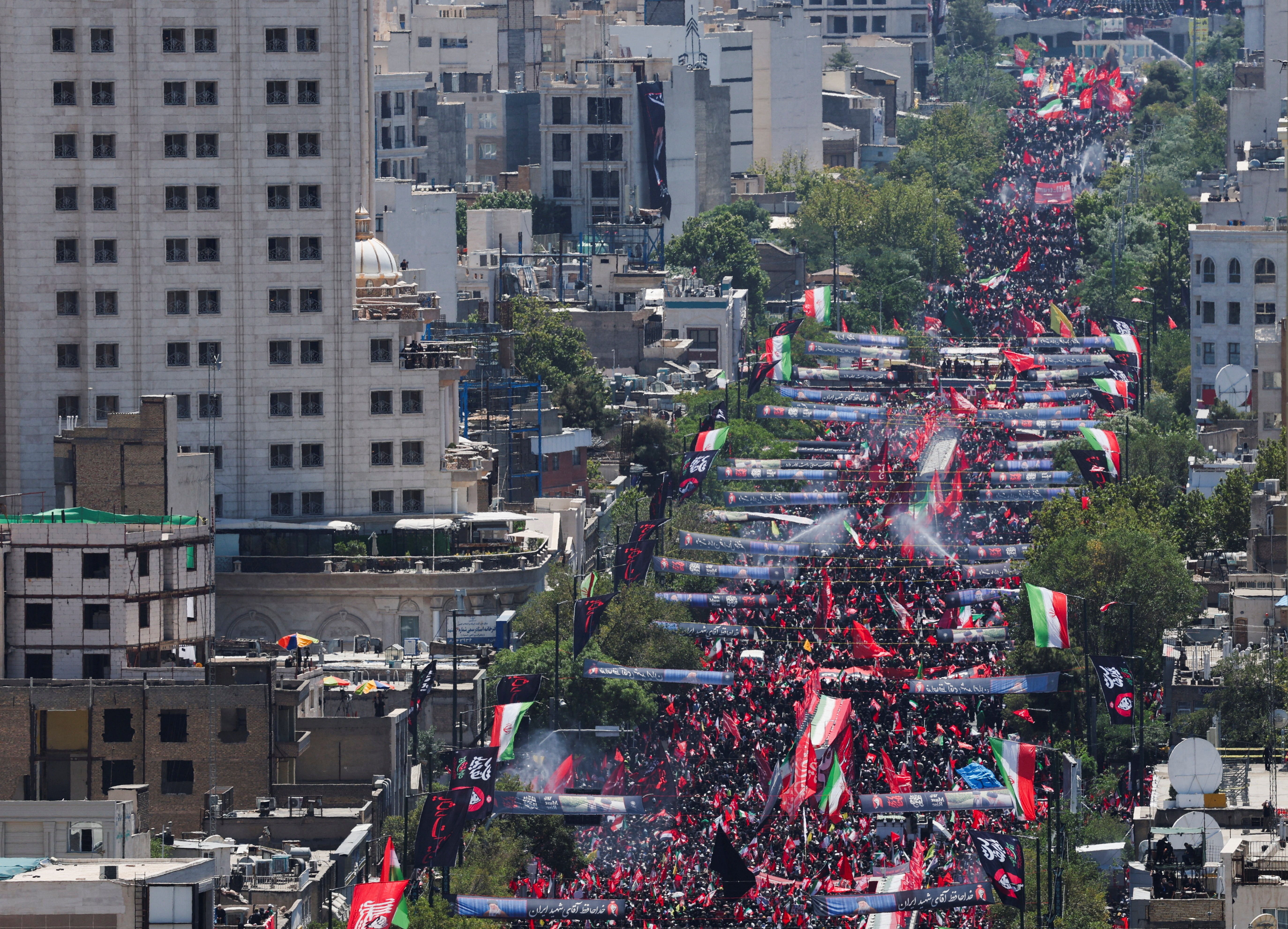
Iran has buried its former supreme leader, Ali Khamenei, at the country's holiest shrine in Mashhad. The burial took place on Thursday, May 9th, following several days of public funeral processions. Khamenei's body, along with those of four relatives, was displayed in cortege across Iran and Iraq. Thousands of mourners gathered at the Imam Reza Shrine, with some calling for vengeance and the death of the US President, Donald Trump. Khamenei was reportedly killed in an attack by the US and Israel on February 28th, the first day of a war. Iranian authorities preserved the bodies of Khamenei and his relatives for four months following the attack. Islamic tradition typically dictates burial within a few days of death. However, Iranian officials announced in early March that the ceremony would be postponed due to logistical and security concerns, with the funeral officially announced in early June, nearly two months after a ceasefire began. State media reported that the ceremonies, starting May 4th, drew millions of people. An organizing committee spokesperson stated that the bodies were preserved in accordance with religious norms, without detailing the method, though Islamic law generally prohibits chemical embalming. An Iraqi historian suggested Khamenei's body was likely kept in a refrigerated chamber, a practice permissible under Shia Islamic law in exceptional circumstances with religious authorization, which would likely be obtainable for a supreme leader.
The extended preservation and public display of Ali Khamenei's remains, following his reported death in a February 28th conflict, highlight the strategic use of state funerals for political messaging. The Iranian government's decision to delay the burial for months, citing logistical and security reasons, likely served to consolidate national mourning and project an image of resilience and authority in the face of external conflict. The public calls for vengeance against the US and President Trump during the funeral underscore the ongoing geopolitical tensions and the role of such events in galvanizing domestic support and reinforcing national narratives. The preservation methods, while framed within religious observance, also demonstrate a calculated approach to managing the symbolic power of a deceased leader, potentially influencing future political discourse and succession dynamics within Iran over the next decade.
AI-generated to prompt reflection — not editorial opinion, not advice, not a statement of fact. How this works.