Iran Claims Seven Soldiers Killed in US Strikes; Exchange of Attacks Escalates
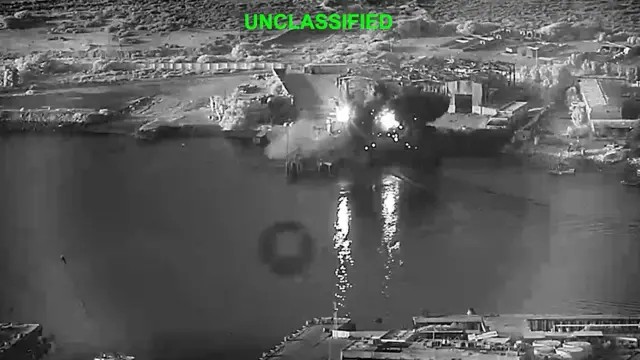
The Iranian army announced that seven of its military personnel were killed in a United States missile strike on a barracks near Iranshahr, in southeastern Iran, on Wednesday, January 15th. This announcement comes amid escalating confrontations between the U.S. and Iran, with the U.S. resuming military blockades of Iranian ports to ensure safe passage through the Strait of Hormuz. Despite these efforts, Iran's Revolutionary Guard reiterated its stance that the Strait will remain closed until U.S. "acts of aggression" cease. The U.S. Central Command confirmed launching "a new series of strikes against dozens of military targets" in Iran on Tuesday night, January 14th. In response, Iran reported bombing U.S.-linked targets in several Gulf countries, including facilities used by the U.S. Fifth Fleet in Bahrain, which Iran claimed were destroyed. Bahrain's armed forces confirmed intercepting Iranian missiles and condemned the offensive. Kuwait reported new drone attacks on Wednesday, following missile and drone strikes that injured four soldiers on Tuesday. Jordan's military stated it downed three Iranian missiles. The renewed U.S. naval blockade and intensified bombings undermine diplomatic efforts and a ceasefire protocol signed on June 17th. The International Maritime Organization reported several oil tanker attacks in the Strait of Hormuz since Monday night, resulting in at least two deaths and several injuries. The United Nations expressed concern over the "grave socioeconomic and humanitarian consequences" of blocking this vital shipping route. The U.S. also imposed sanctions on a tanker network linked to Mohammad Hossein Shamkhani and froze $130 million in cryptocurrency assets connected to Iran's Central Bank.
The escalating military actions between Iran and the United States, including missile strikes and naval blockades, highlight a critical geopolitical tension point with significant global economic implications. The disruption of the Strait of Hormuz, a vital artery for global trade, threatens international supply chains and energy markets, potentially triggering broader economic instability. Both nations are leveraging military and economic pressure, with Iran framing its actions as retaliation for U.S. aggression and the U.S. aiming to maintain freedom of navigation. This cycle of escalation risks further destabilization in the region and could impede long-term diplomatic resolutions. The international community's concern, voiced by the UN, underscores the systemic risk posed by such conflicts to global commerce and humanitarian stability, necessitating careful diplomatic navigation to de-escalate tensions and prevent wider conflict.
AI-generated to prompt reflection — not editorial opinion, not advice, not a statement of fact. How this works.