Iran Claims Strait of Hormuz Attacks; Houthis Blockade Red Sea
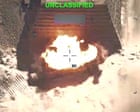
Iran's Revolutionary Guards claimed responsibility for an attack on an oil tanker in the Strait of Hormuz early Tuesday, forcing the crew to abandon the vessel. The Guards also claimed two other ship attacks in the waterway on Monday. Concurrently, Yemen's Iran-backed Houthis announced an immediate maritime blockade of Saudi Arabia in the Red Sea, following exchanges of fire between the two sides last week. These actions occur amidst escalating tensions, with the US military's Central Command conducting airstrikes to degrade Iran's capabilities against commercial shipping. The US strikes targeted military command centers and missile and drone launch sites. Iranian media reported strikes within Iran, including in Bandar Abbas, Tabriz, and Bushehr, and stated Iran launched retaliatory attacks against Bahrain, Kuwait, and Jordan, all of which host US forces. The Pentagon also admitted that nearly 100 troops have been injured in recent weeks. Oil prices saw a slight decrease, with Brent crude futures easing 0.4% to $88.87 a barrel and US West Texas Intermediate crude for September delivery steady at $82.47 a barrel. The deaths of three US troops in what are described as Iranian strikes have prompted calls from Democrats for President Trump to reverse his policy towards Iran.
The reported escalations in the Strait of Hormuz and the Red Sea highlight the complex geopolitical incentives driving regional instability. Iran's actions, framed as reprisals, appear designed to exert pressure on the US and its allies by disrupting vital maritime trade routes, potentially impacting global energy markets and influencing international perceptions of security. The Houthi blockade announcement, synchronized with Iranian claims, suggests a coordinated effort to broaden the conflict's geographic scope and amplify its disruptive potential. This dynamic raises questions about the efficacy of current deterrence strategies and the potential for unintended consequences, such as further entrenching regional rivalries and exacerbating humanitarian concerns. The interconnectedness of these events underscores the systemic risks inherent in proxy relationships and the challenges of de-escalation in a multipolar security environment.
AI-generated to prompt reflection — not editorial opinion, not advice, not a statement of fact. How this works.