Iran Conflict Exposes Rift Between Trump and Saudi Crown Prince
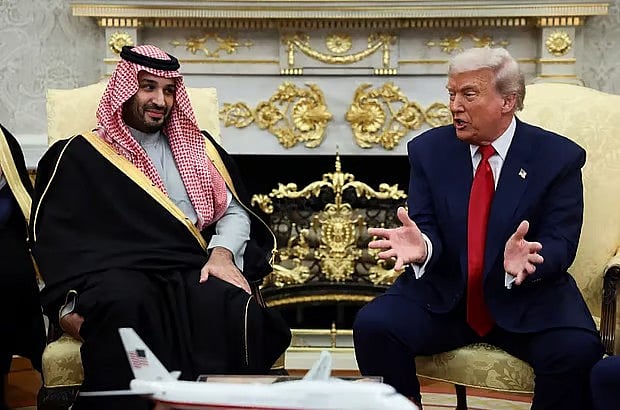
Tensions between U.S. President Donald Trump and Saudi Crown Prince Mohammed bin Salman have escalated following Iran's military actions, particularly concerning a U.S.-led maritime security operation in the Strait of Hormuz. Initially, the Crown Prince had urged President Trump to confront Iran, but as tensions rose, he called for de-escalation and found himself at odds with the U.S. administration.
The U.S. military planned "Project Freedom" to protect commercial vessels passing through the Strait of Hormuz after Iran threatened to close it. However, Saudi Arabia unexpectedly denied U.S. forces access to its airspace for this operation, leading to urgent and tense phone calls between Trump and the Crown Prince, as well as other high-ranking U.S. officials. Despite White House efforts, the Crown Prince remained firm, fearing increased Iranian retaliation if Saudi Arabia facilitated the U.S. operation. Consequently, "Project Freedom" was aborted less than 48 hours after its planned launch.
This incident highlights a growing divergence in strategic perspectives between the U.S. and Saudi Arabia on Middle Eastern security, especially regarding Iran and Israel. Saudi Arabia increasingly views the U.S. as unreliable and potentially a risk to Gulf Arab nations. While the U.S. seeks diplomatic engagement with Iran, Saudi Arabia is pursuing its own foreign policy, strengthening ties with countries like Pakistan and China, the latter having mediated the Saudi-Iran détente in 2023. Saudi officials are now engaging directly with Iran on issues like its regional influence and missile program, which they consider greater threats than Iran's nuclear ambitions. Despite these disagreements, some partnerships remain strong, including discussions on a Saudi civilian nuclear program and ongoing arms sales, with Saudi Arabia being a major U.S. weapons purchaser.
The U.S.-Saudi relationship, historically a cornerstone of regional stability, is undergoing significant stress due to divergent strategic priorities concerning Iran. The U.S. administration's approach, characterized by fluctuating decisions and a desire for diplomatic engagement, has fostered distrust among Saudi leadership. This distrust stems from a perceived lack of guaranteed U.S. security commitments, particularly after past incidents where U.S. responses to Iranian provocations were deemed insufficient by Riyadh. Saudi Arabia's pivot towards independent foreign policy, including strengthened ties with China, reflects a strategic recalibration to secure its national interests in an evolving geopolitical landscape. This dynamic suggests a potential shift in regional power balances, where traditional alliances are being re-evaluated based on perceived reliability and efficacy in addressing existential threats, prompting a need for a more robust and predictable U.S. foreign policy framework to maintain influence.
AI-generated to prompt reflection — not editorial opinion, not advice, not a statement of fact. How this works.