Iran Declares End to Peace Talks Unless US President Trump Halts Threats
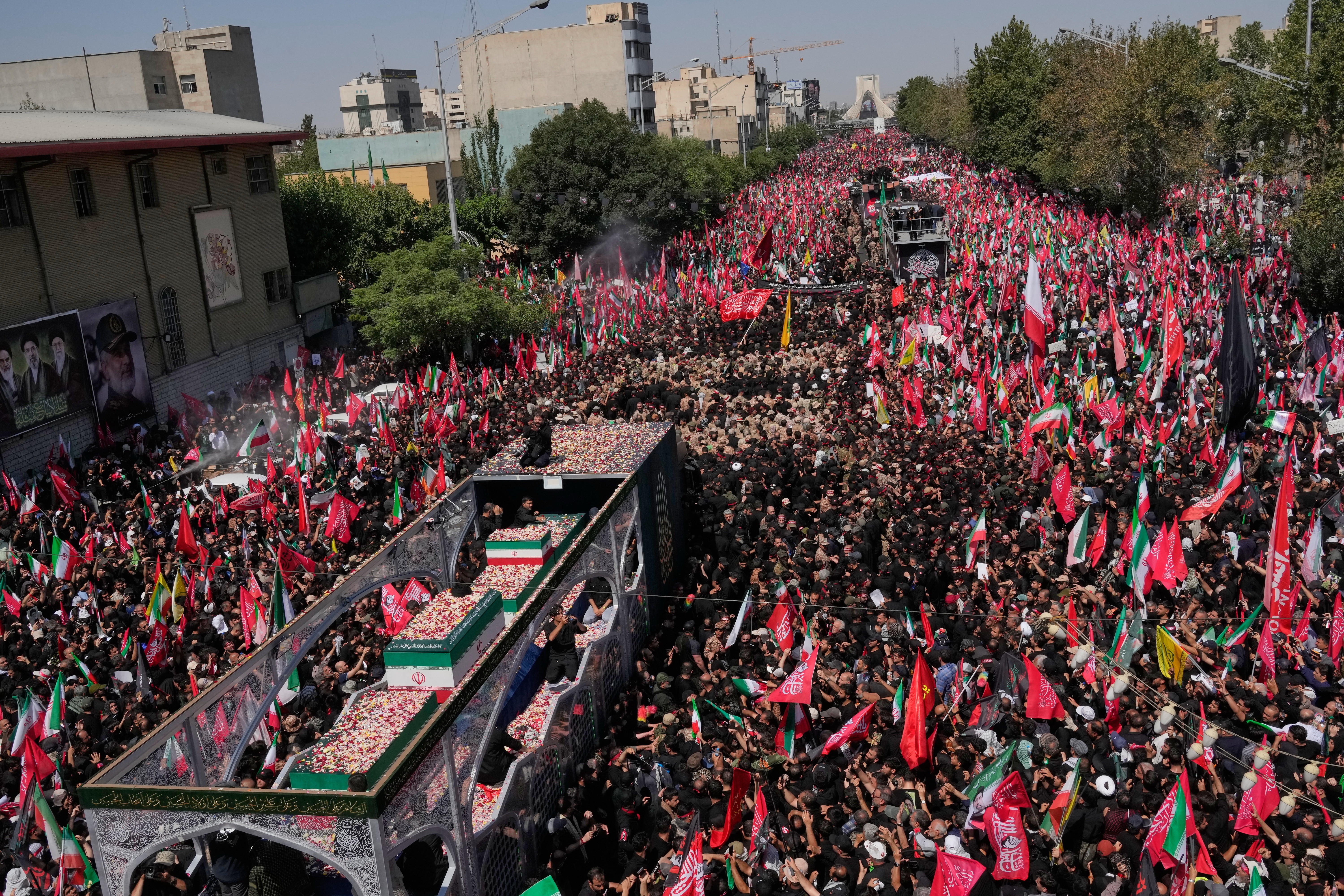
Iran's Foreign Minister, Abbas Araqchi, announced on Tuesday, January 7, that peace negotiations will cease unless U.S. President Donald Trump stops his repeated threats to restart the war. Araqchi criticized Trump's statements, asserting they violate the terms of a memorandum of understanding reached last month to suspend hostilities. He posted a photo of a large crowd attending the funeral of the former supreme leader, Ayatollah Ali Khamenei, stating that millions of Iranians honoring Khamenei and the armed forces will not be intimidated by threats. The minister emphasized that final agreement negotiations will not commence if the threats persist, urging Trump to "honor your signature."
Thousands of Iranians, dressed in black, filled the streets of Tehran on Monday, January 6, for a procession honoring the late supreme leader, Ayatollah Ali Khamenei, who died on February 28, 2026, at age 86, during a joint U.S. and Israeli airstrike. The bombing also killed his daughter, son-in-law, a daughter-in-law, and a grandson. Mourners carried signs and chanted slogans calling for the death of President Donald Trump, whom they hold responsible for Khamenei's death. The funeral procession, which began on Saturday, January 4, and is expected to conclude on Thursday, January 9, with burial in Mashhad, has drawn immense crowds, with aerial images suggesting participation exceeding that of the 2020 procession for General Qassem Soleimani. Participants expressed a desire for revenge, with some calling for the assassination of both Trump and Israeli Prime Minister Benjamin Netanyahu.
The Iranian government's linkage of peace negotiations to the cessation of U.S. presidential threats highlights a strategic communication tactic. By framing the decision to halt talks around Trump's rhetoric, Iran positions itself as a reactive party, defending national honor and sovereignty in the face of perceived intimidation. This narrative aims to consolidate domestic support by channeling public grief and anger into a unified stance against external pressure. From a geopolitical perspective, this move could be interpreted as an attempt to de-escalate tensions by imposing conditions, or conversely, as a tactic to gain leverage in future diplomatic engagements. The large public turnout at the funeral, amplified by state media, serves as a potent display of national unity and resolve, intended to underscore the seriousness of Iran's position and the potential consequences of continued adversarial relations. The juxtaposition of mourning with calls for retribution against U.S. and Israeli leadership reflects the complex interplay of grief, political messaging, and historical grievances within the current geopolitical climate.
AI-generated to prompt reflection — not editorial opinion, not advice, not a statement of fact. How this works.