Iran Escalates Attacks on Gulf Allies After US Strikes; Shipping Disrupted
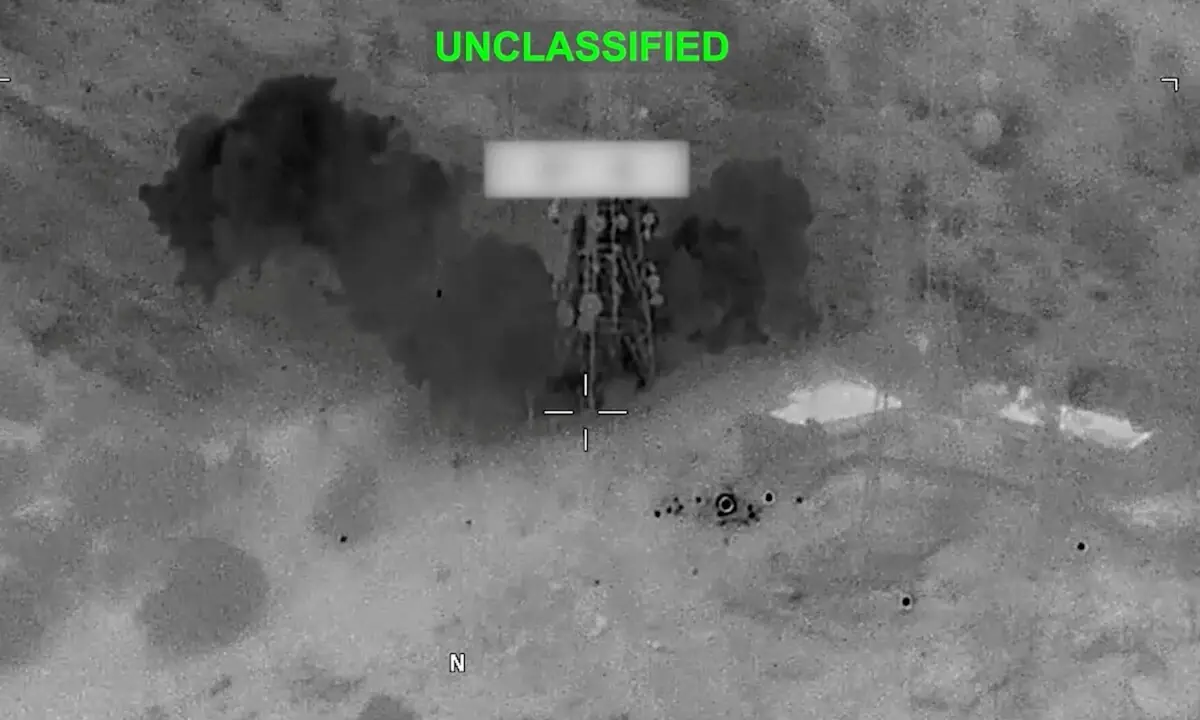
Iran launched renewed attacks on US allies in the Persian Gulf on Saturday, following a seventh consecutive night of US strikes targeting Iranian military sites. This escalation occurred one week after a fragile ceasefire agreement collapsed, reigniting fears of a full-scale war. Both nations engaged in actions affecting shipping traffic, with the US enforcing a naval blockade and Iran targeting vessels it claims violated navigation rules in the Strait of Hormuz. Oil prices surged over four percent on Friday, reaching their highest point in over a month, potentially impacting upcoming US congressional elections. The US military's Central Command reported hitting surveillance sites, logistics infrastructure, weapons storage, and maritime capabilities. Conversely, Iranian media reported missile strikes on power facilities and desalination pumps in Jask, causing water supply disruptions to local villages. The US military stated its forces redirected, disabled, and boarded commercial vessels to enforce the blockade. Iran's Revolutionary Guards claimed to have stopped four vessels violating shipping rules in the Strait of Hormuz. Reports of two oil tankers exploding and catching fire after passing through a mined route south of the strait were labeled false by the US military. Meanwhile, armed men seized another vessel off Yemen, raising concerns about security in the Red Sea shipping route. Iran's state television quoted the Revolutionary Guards stating that no exports of chemical fertilizers, oil, or gas would be possible from the region until US "aggression" ends. An adviser to Iran's supreme leader warned against US escalation or territorial seizure. Iran's army also claimed to have struck US military targets in Kuwait and Jordan, including an ammunition depot and fuel tanks. United Nations Secretary-General Antonio Guterres expressed concern over the escalation and attacks on civilian infrastructure. Iranian media reported civilian casualties and damage to infrastructure, including bridges and a road tunnel, in Hormozgan Province.
The escalating conflict between Iran and the United States, characterized by reciprocal strikes and disruptions to vital shipping lanes, highlights the inherent instability of geopolitical flashpoints. The economic repercussions, evidenced by rising oil prices, underscore the global vulnerability to regional conflicts. Both actors appear to be employing asymmetric tactics, with Iran leveraging its influence over regional proxies and the US utilizing its advanced military capabilities. The situation presents a complex challenge for international governance, as the breakdown of diplomatic agreements and the pursuit of strategic advantage risk further destabilization. Future de-escalation will likely depend on a recalibration of strategic incentives and a renewed commitment to dialogue, acknowledging the interconnectedness of regional security and global economic stability in the context of evolving energy markets and geopolitical alignments.
AI-generated to prompt reflection — not editorial opinion, not advice, not a statement of fact. How this works.