Iran Holds Mass Funeral for Supreme Leader Ali Khamenei; Son Mojtaba Remains Missing
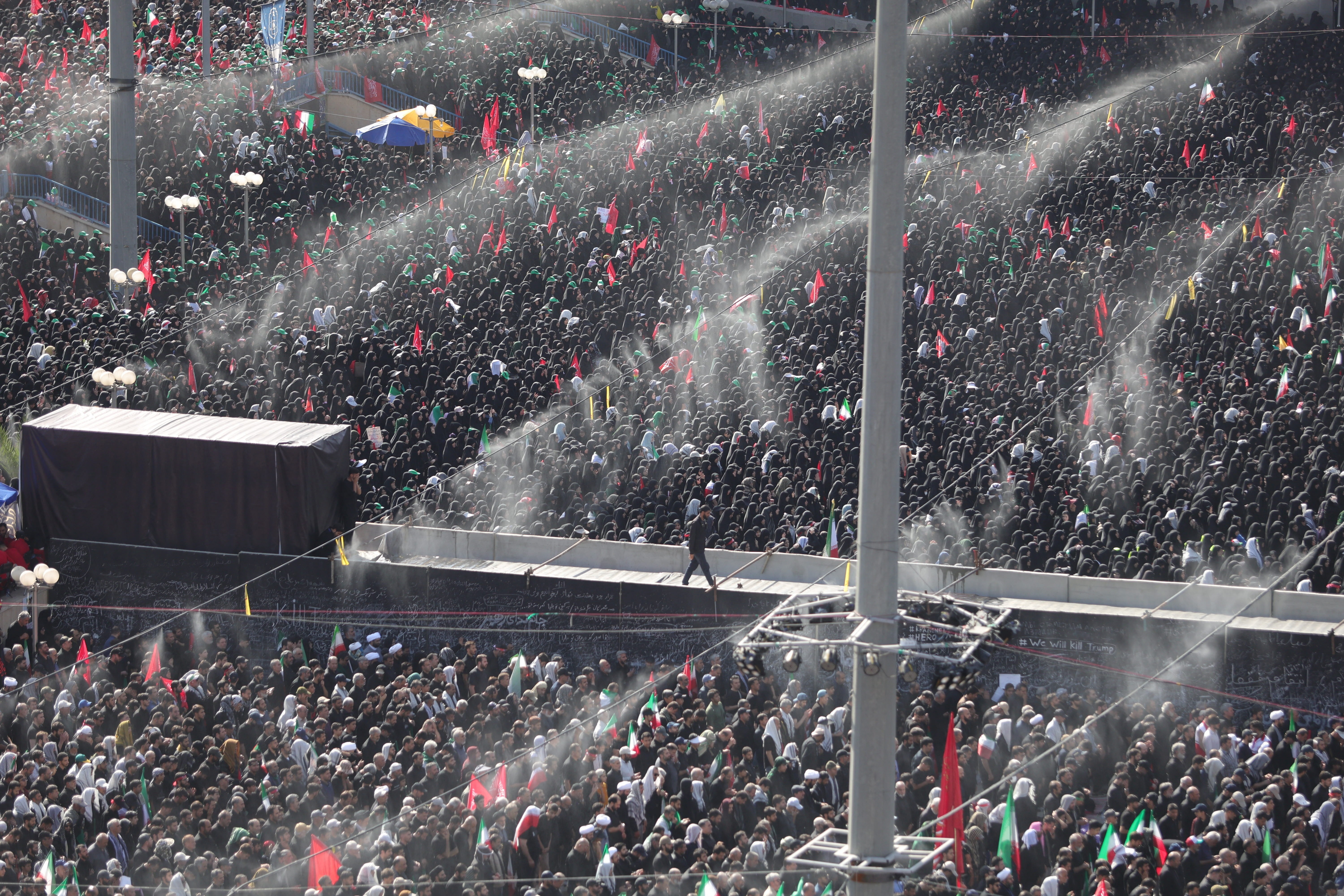
Three sons of Iran's Supreme Leader Ali Khamenei, Meysam, Masoud, and Mostafa, attended a public funeral service on Sunday, July 5, 2026, praying alongside his coffin in Tehran. The event occurred on the second day of public farewell ceremonies, which saw thousands of mourners gather at the Grand Mosalla Imam Khomeini complex. Notably, Mojtaba Khamenei, widely considered his father's successor, has not appeared publicly and remains missing. Sources suggest Mojtaba was injured in a February 28 bombing by the U.S. and Israel, which reportedly killed his father and other family members, sustaining facial disfigurement and significant leg injuries. Ali Khamenei also has two daughters, Boshra and Hoda, whose attendance at the funeral was not confirmed. The Islamic Republic is conducting a week-long series of mass funeral processions, including a transfer of remains to Shia religious sites in Iraq. Following an indoor viewing for officials, Khamenei's coffin was displayed outdoors on Saturday, drawing large crowds, with Tehran's metro reporting 7 million trips between Saturday night and Sunday morning. Iranian President Masoud Pezeshkian and Parliament Speaker Mohammad Baqer Qalibaf were also present. The funeral proceedings are scheduled to continue with a major procession in Tehran on Monday, followed by ceremonies in Qom, and then in the Iraqi cities of Najaf and Karbala. The body will return to Iran for a final procession in Mashhad. Authorities are organizing extensive logistical support, including transportation, food, and accommodation, for millions of expected attendees. A ceasefire in a four-month war has been implemented, which Iranian officials claim will bring significant economic benefits and represents a victory. U.S. President Donald Trump indicated that peace treaty negotiations with Iran have been paused for a week due to the funeral events.
The extensive public funeral ceremonies for Supreme Leader Ali Khamenei, featuring mass mobilizations and international travel of remains, underscore the Iranian state's capacity for consolidating national identity and projecting power through ritual. The reported absence and injury of Mojtaba Khamenei, a key figure in succession discussions, introduces a significant element of uncertainty regarding future leadership stability, potentially creating opportunities for internal political maneuvering. The framing of the war's end as a "victory" and the concurrent pause in U.S. negotiations suggest a strategic effort by Iranian authorities to leverage domestic mourning and perceived geopolitical gains to strengthen their negotiating position and internal legitimacy in the coming decade. The state's extensive logistical planning for the funeral highlights the critical role of public-facing events in maintaining social cohesion and demonstrating state control in a complex geopolitical environment.
AI-generated to prompt reflection — not editorial opinion, not advice, not a statement of fact. How this works.