Iran Holds State Funeral for Assassinated Supreme Leader Ali Khamenei in Tehran
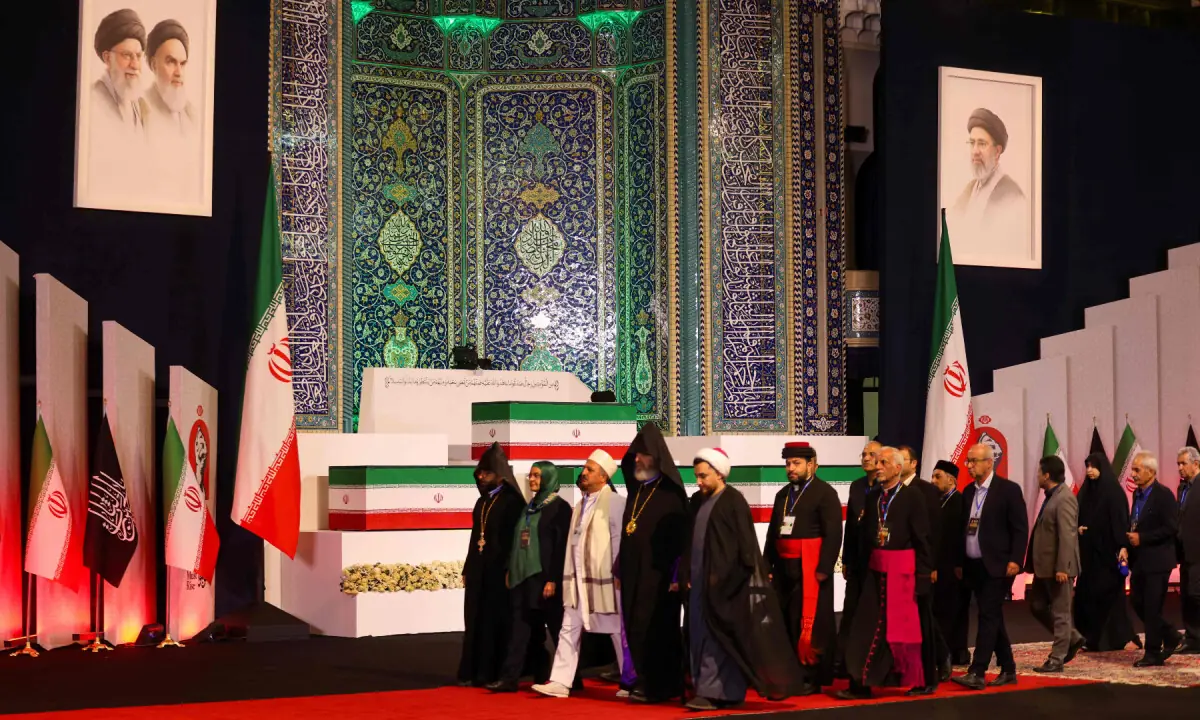
Tehran, Iran hosted a state funeral on July 3, 2026, for the nation's assassinated Supreme Leader, Ayatollah Ali Khamenei. Khamenei was killed in February 2026 during a strike attributed to the United States and Israel. The funeral procession is scheduled to traverse multiple significant locations, including Tehran, the holy cities of Qom, Karbala, Najaf, and finally Mashhad. These stops are intended to honor the religious, political, and ideological foundations of the Islamic Republic. The funeral's commencement was delayed due to the ongoing Middle East war, but it now proceeds under a fragile ceasefire. This ceasefire follows the signing of the Islamabad Memorandum of Understanding, aimed at halting the conflict between Iran and the US. Prominent international figures, including Pakistan's Prime Minister Shehbaz Sharif and Chief of Defence Forces Field Marshal Asim Munir, attended the ceremonies in Tehran to pay their respects. They were seen offering prayers and signing a condolence book. The event also saw public displays of mourning, with billboards featuring Khamenei's image displayed throughout the city. A statue of Khamenei's hand was installed in Enghelab Square, and images of Khamenei alongside Ayatollah Ruhollah Khomeini and his son, Mojtaba Khamenei (the current Supreme Leader), were visible on streets.
The state funeral for Ayatollah Ali Khamenei, framed as an assassination, occurs amidst a fragile ceasefire following a significant regional conflict. The extensive procession through multiple holy and political centers underscores the symbolic importance of leadership and religious authority within the Islamic Republic's governance structure. The participation of international leaders, particularly from Pakistan, highlights the complex geopolitical dynamics and the efforts to stabilize relations post-conflict. The timing of the funeral, coinciding with the Islamabad Memorandum of Understanding, suggests a strategic effort to consolidate national unity and project an image of continuity and resilience, even as the region navigates a period of heightened tension and potential future instability. The commemoration also serves to reinforce the ideological narrative of the state, potentially influencing public sentiment and regional perceptions in the post-conflict era.
AI-generated to prompt reflection — not editorial opinion, not advice, not a statement of fact. How this works.