Iran Holds State Funeral for Supreme Leader Ali Khamenei Amid 'Vengeance' Chants
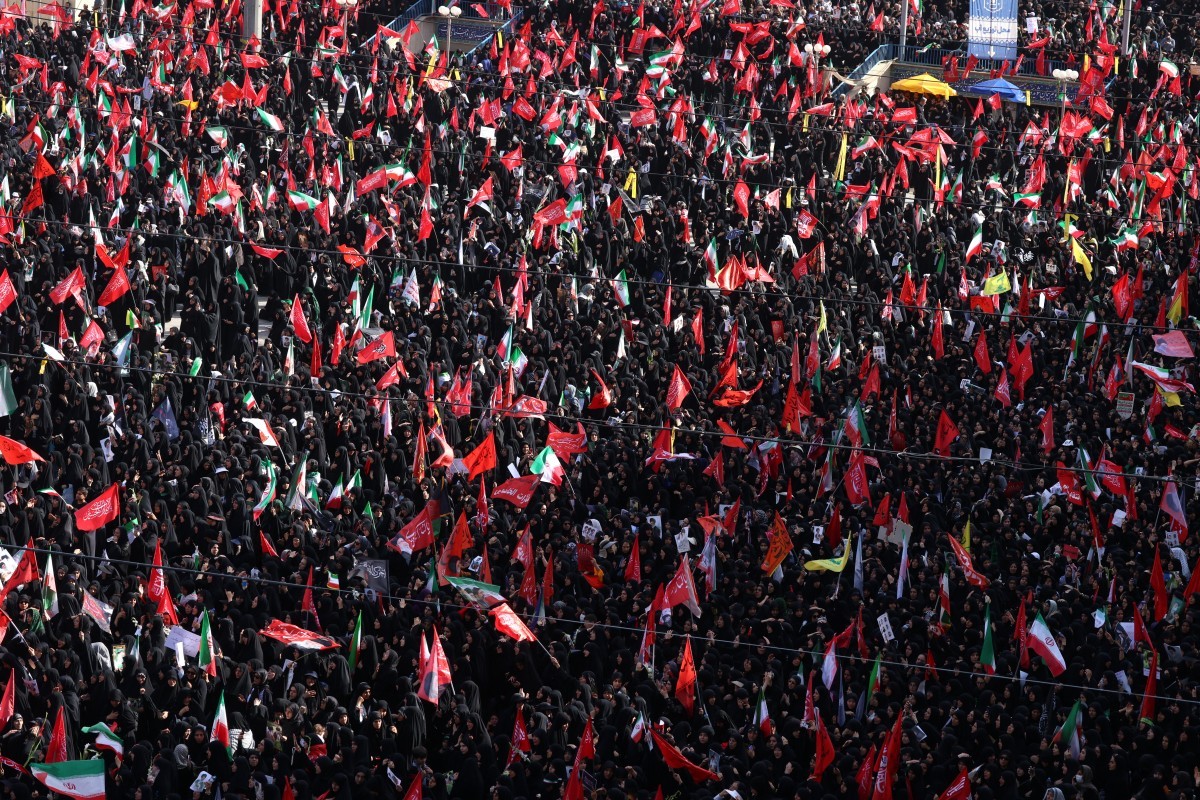
Thousands of mourners gathered in Tehran on Saturday, July 4, 2026, for the state funeral of Iran's late Supreme Leader, Ayatollah Ali Khamenei. The ceremony, held at the Grand Mosalla religious complex, marked a significant public display following the recent conflict with Israel and the United States. Khamenei died on February 28, reportedly from Israeli and American bombings that initiated the war. His coffin, adorned with his black turban, was displayed as attendees, largely dressed in black, chanted slogans like "Revenge!" and "Death to America, death to Israel!" Some posters also called for "#KillTrump" on the same day the U.S. celebrates its 250th independence anniversary. Officials anticipate between 15 and 20 million people will participate in the six-day tributes across Tehran, potentially making it the largest in the country's history. The event occurs amidst diplomatic negotiations between the U.S. and Iran, following a framework agreement to end the conflict. Khamenei's son, Mojtaba, who reportedly succeeded him as supreme guide in early March and was allegedly injured in the attacks that killed his father, has not appeared publicly and communicates through written messages. The funeral proceedings include a procession through the capital, stops in various Iranian and Iraqi cities, and a final burial on July 9 in Mashhad. The ceremonies also honor Khamenei's family members who died with him, including a daughter, son-in-law, daughter-in-law, and a 14-month-old granddaughter. The event is being held six months after widespread protests against the high cost of living and the government.
The state funeral for Ayatollah Ali Khamenei serves as a potent demonstration of national unity and ideological resolve, particularly in the wake of recent geopolitical escalations. The prominent "revenge" and anti-American/Israeli sentiments expressed by attendees underscore the enduring narrative of resistance against perceived foreign adversaries, a cornerstone of the Islamic Republic's political identity. This public display of solidarity, occurring during sensitive diplomatic negotiations, strategically projects an image of internal cohesion and unwavering commitment to the regime's principles, potentially influencing future international engagements. The scale of the event and the accompanying rhetoric highlight the regime's capacity to mobilize popular support and frame national narratives, especially in a region characterized by complex power dynamics and historical grievances. The juxtaposition of mourning with calls for retribution reflects the intricate interplay between national identity, religious fervor, and foreign policy objectives within Iran's strategic calculus.
AI-generated to prompt reflection — not editorial opinion, not advice, not a statement of fact. How this works.