Iran Mourns Ayatollah Khamenei Amid Accusations of Israeli Assassination and Western Media Bias
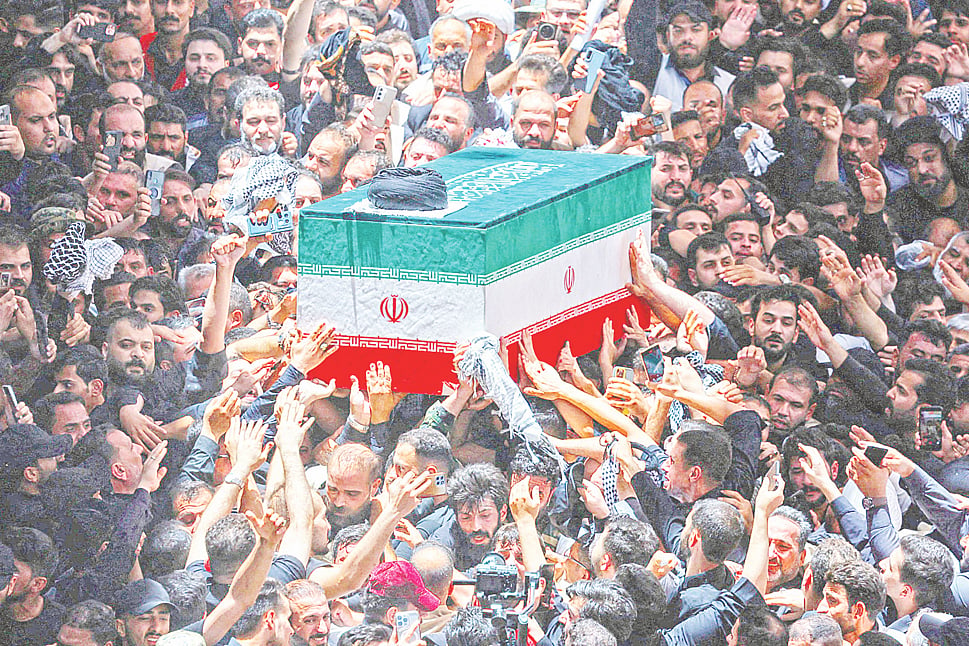
Ayatollah Ali Khamenei's funeral ceremonies, held across Iran and Iraq, were marked by traditional Persian mourning rituals. The event has sparked significant debate, particularly concerning accusations that Israel violated Iranian airspace and assassinated the country's supreme leader. This alleged Israeli plot is described as the latest step in a long history of targeted assassinations, as detailed by journalist Ronen Bergman in his book "Rise and Kill First: The Secret History of Israel's Targeted Assassinations." Khamenei, a spiritual leader and head of state for millions of Shia Muslims, was seen by some as a figure whose assassination by Israel signals an aggressive stance, potentially targeting any individual deemed detrimental to Israeli interests, including leaders of Western nations.
The article criticizes Western media, particularly The New York Times, for what it perceives as a lack of outrage over Khamenei's assassination. The reporting on his death is characterized as detached, akin to a weather forecast. The author argues that while Khamenei was a beloved figure to millions and a head of state representing a revolutionary nation, his legacy and evaluation should be solely determined by Iranians. The piece contrasts the scale of public mourning with media portrayals, citing The New York Times' initial underestimation of attendance at the funeral, which was later revised. The narrative suggests that Western media attempts to divide Iranians into 'religious' and 'secular' camps, a division the author claims is not reflective of Iranian society.
The author posits that the Western media's framing of the event aims to diminish the significance of the public's grief and implicitly justify Khamenei's assassination. The article highlights the rich Iranian-Islamic culture, encompassing poetry, philosophy, and intellectual history, which it argues is largely unknown and misunderstood by Western media. Ultimately, the piece asserts that the right to evaluate Khamenei's legacy belongs exclusively to the Iranian people, not to Israeli officials or their perceived Western media allies. The author concludes by reflecting on the complex nature of leadership and legacy, drawing parallels to historical figures and rituals of mourning.
The provided text frames Ayatollah Khamenei's assassination and subsequent funeral as a geopolitical event highlighting alleged Israeli aggression and Western media complicity. The analysis focuses on the narrative of an "Israeli plot" and Western media's perceived bias, suggesting a deliberate downplaying of the event's significance. From a systems perspective, the narrative reflects a common dynamic where state-sponsored actors engage in asymmetric conflict, often accompanied by information warfare aimed at shaping public perception and international opinion. The critique of Western media's reporting style and alleged underestimation of public turnout suggests a broader tension between journalistic norms and the portrayal of state-sanctioned events in adversarial geopolitical contexts. The text implicitly questions the efficacy of Western media narratives in understanding complex cultural and political expressions, particularly within societies that have historically experienced external intervention or influence. The analysis prompts consideration of how national narratives are constructed during periods of heightened political tension and the role of media in either reinforcing or challenging these narratives, particularly when dealing with figures of significant national and international consequence.
AI-generated to prompt reflection — not editorial opinion, not advice, not a statement of fact. How this works.