Iran mourns former Supreme Leader Ali Khamenei amid calls for Trump's death
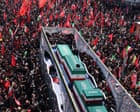
Iran is holding extensive funeral processions for its former Supreme Leader Ali Khamenei, who died on February 28 along with family members during what the report describes as the "US and Israeli war against Iran." Millions have gathered in Tehran for the ceremonies, which have also featured public pronouncements against former US President Donald Trump. During one part of the funeral, poet Mohammad Rasouli stated, "I swear by your blood; Trump’s murder is our responsibility. Why is the most bastard man in the world still alive? ... Why should we not kill the man who killed our imam? It would be a disgrace if we did not." The report also notes the absence of Mojtaba Khamenei, who was appointed as the new Supreme Leader ten days after his father's death, from public view for three months. His brothers, Mustafa, Massoud, and Meysam, were seen together at the funeral. Separately, the article mentions a court ruling that permits the termination of Temporary Protected Status (TPS) for over 350,000 Haitians and 6,000 Syrians. TPS is a program that allows individuals to reside and work in the U.S. if their home countries are deemed unsafe due to conflict or natural disasters. A statement from Giménez explained that TPS is intended to protect individuals fleeing failed states or countries unable to manage current crises, citing Venezuela's situation after a natural disaster.
The reported public calls for the assassination of a former US president within the context of a national mourning period highlight significant geopolitical tensions and the potential for rhetoric to escalate. The absence of the newly appointed Supreme Leader's son from public view raises questions about internal succession dynamics and stability within Iran's leadership. The juxtaposition with the US court ruling on TPS for Haitian and Syrian nationals underscores differing national priorities and approaches to humanitarian crises and international relations. This event could influence future diplomatic engagements and regional security considerations, particularly concerning the interplay of internal political messaging and foreign policy.
AI-generated to prompt reflection — not editorial opinion, not advice, not a statement of fact. How this works.