Iran Navigates Post-Khamenei Era: What Do the Rulers Want?
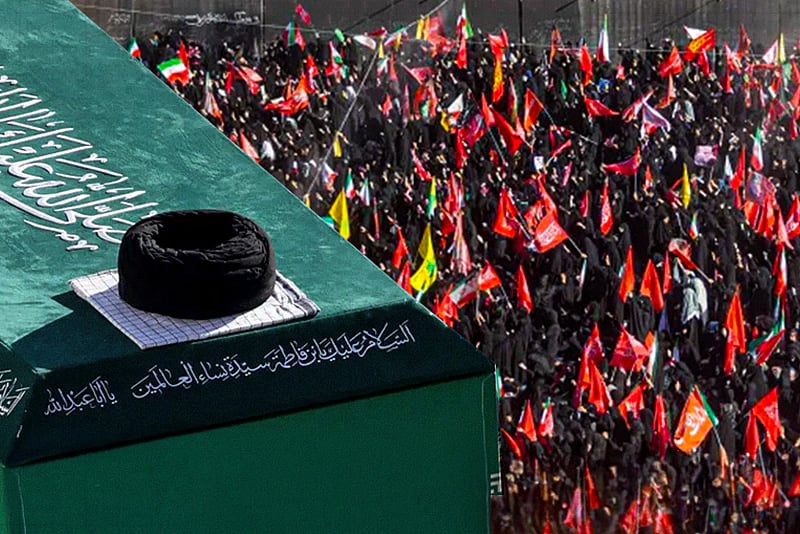
Following the death of Ayatollah Ali Khamenei, Iran is entering a period of significant transition, marked by public mourning and a national reckoning with its future direction. During Khamenei's funeral procession, vast crowds were seen holding red flags, a symbol that has sparked widespread discussion about its intended message and implications for the nation's path forward. The presence of these flags has led to speculation about the signals the Iranian leadership aims to convey both domestically and internationally during this critical juncture.
The nation now faces the complex task of selecting a successor and defining the political and ideological trajectory of the Islamic Republic. The leadership's ultimate goals and strategies in this new era remain a subject of intense interest and analysis. The transition presents a pivotal moment for Iran, potentially reshaping its internal policies and its role on the global stage as it navigates the post-Khamenei landscape.
The passing of a long-standing supreme leader in Iran introduces a period of profound uncertainty, compelling a re-evaluation of the nation's governance structures and strategic objectives. The symbolic display of red flags during mourning rituals warrants careful interpretation, as such imagery often carries layered meanings within political and cultural contexts, potentially signaling continuity, a shift in ideological emphasis, or a call for national unity under new leadership. The succession process will likely test the resilience of Iran's political system and its ability to manage internal power dynamics while addressing external pressures. The international community will be closely observing how the new leadership navigates economic challenges, regional security concerns, and its relationship with global powers, seeking clarity on whether the fundamental tenets of the Islamic Republic will be preserved or adapted in response to evolving domestic and geopolitical realities over the next decade.
AI-generated to prompt reflection — not editorial opinion, not advice, not a statement of fact. How this works.